
The Real Cost to Finish a Basement in St. Louis (And What Drives the Price Up)
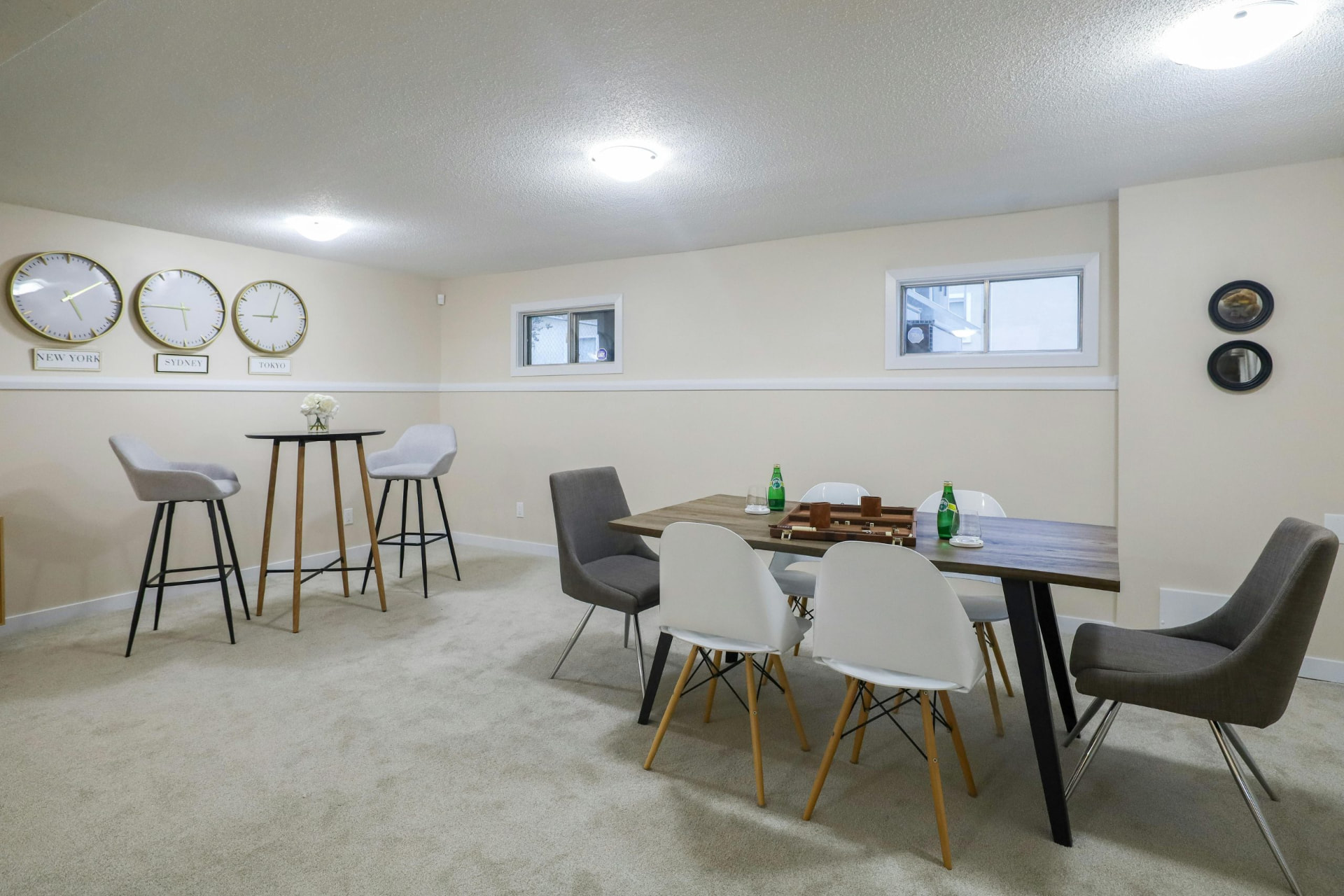
If you’ve got an unfinished basement in St. Louis, you’re sitting on the cheapest square footage you’ll ever add to your home. There’s no foundation to pour, no roof to build, no exterior walls to side. The bones are already there.
That’s also why basement finishing pricing is all over the place. We’ve seen homeowners get quoted $25,000 for the same basement, another contractor priced at $85,000 — and the wild thing is, both quotes might be technically accurate. They’re just describing completely different finished basements.
This guide breaks down what basement finishing actually costs in the St. Louis metro in 2026, what drives the price, and what you should expect at three realistic budget levels.
The Short Answer
For a typical 800–1,200 square foot basement in a St. Louis area home, most full finishes in 2026 fall into one of three ranges:
- Basic finish: $35,000 – $60,000
- Mid-range finish: $65,000 – $110,000
- High-end finish: $115,000 – $200,000+
Square footage is a big variable. A 1,500-square-foot walkout basement in Wildwood will cost more than a 700-square-foot dry basement in a smaller home. But the per-square-foot range in our market is roughly $45–$150 depending on scope.
Let’s break down what those tiers actually include.
Tier 1: Basic Finish — $35,000 to $60,000
A basic finish gives you a usable, comfortable basement without premium features. It’s still a real, properly built finished basement — not a half-measure.
What’s typically included:
- Framed and insulated walls with drywall and basic trim
- Standard ceiling — usually drywall or basic suspended drop ceiling
- Luxury vinyl plank (LVP) flooring throughout
- One full bathroom with standard fixtures
- Basic recessed and overhead lighting
- Electrical for outlets, lighting, and basic entertainment
- Paint, baseboards, interior doors
- Simple open layout — large rec room, bedroom, bathroom
What’s not included:
- Built-in features (cabinets, shelving, entertainment walls)
- Wet bar or kitchenette
- Premium flooring (real hardwood, tile in main spaces)
- Any structural changes (egress windows being added, walls being moved)
- Significant plumbing relocation
Who this works for: Homeowners who want functional space — a play area for kids, a guest bedroom, a basic family room — without overspending. Common in mid-range neighborhoods where you don’t want to over-invest beyond what the neighborhood supports.
Tier 2: Mid-Range Finish — $65,000 to $110,000
This is where most St. Louis homeowners land. You’re getting a basement that genuinely looks like part of the home, with finishes and features that make it a destination space rather than just extra square footage.
What’s typically included:
- Everything in basic, plus:
- Wet bar or beverage station with cabinetry, sink, mini-fridge space
- Built-in entertainment wall or media area
- Better flooring (premium LVP, carpet in bedroom areas, tile in bathroom)
- Upgraded bathroom with tile shower, nicer vanity, better fixtures
- Designed lighting plan (dimmers, accent lighting, sconces)
- Multiple defined spaces — rec room, bedroom, office or workout area, bathroom
- Better trim package, possibly crown molding
- Egress window addition if needed for a legal bedroom (~$3,500–$6,000)
- More electrical (more outlets, dedicated circuits, possibly home theater pre-wire)
- HVAC adjustments to make sure the basement is actually comfortable year-round
What drives cost up at this tier:
- Adding a true bedroom (requires egress window, closet)
- Wet bar with full plumbing
- Significant layout changes (framing extensive interior walls)
- Premium tile work in bathroom
Who this works for: Most homeowners staying long-term in established suburbs (Chesterfield, Wildwood, Ballwin, St. Peters). Families who want the basement to be a real second living space — not just a room nobody uses except during tornado warnings.
Tier 3: High-End Finish — $115,000 to $200,000+
At this level, your basement isn’t just finished — it’s a designed space that rivals the main floor of the home in quality and intention.
What’s typically included:
- Everything in mid-range, plus:
- Full kitchenette or in-law suite kitchen (range, dishwasher, full-size fridge)
- Home theater room with proper acoustic treatment, riser seating, projector or large display
- Dedicated workout room with rubber flooring, mirrors, ventilation
- Wine cellar or wine room with climate control
- Custom built-ins throughout (entertainment walls, bookshelves, bench seating)
- Premium materials — real hardwood (engineered, suitable for below-grade), high-end tile, designer lighting fixtures
- Multiple bathrooms or a true full bath with separate tub and shower
- Specialty features: sauna, wet bar with ice maker, golf simulator framing
- Smart home integration throughout
- Major structural work where needed — moving stairs, opening up ceilings, adding egress windows
What drives cost up at this tier:
- Custom millwork and built-ins
- Theater room acoustics and AV
- Full kitchen plumbing and electrical
- Wine room cooling systems
- Premium finish materials throughout
Who this works for: Homeowners in high-end neighborhoods (Town and Country, Ladue, Frontenac, larger Wildwood and Chesterfield homes), people creating in-law suites, families who genuinely use the basement as a primary entertainment space, or anyone whose finished basement value will be supported by neighborhood comps.
The Hidden Costs Most Contractors Won’t Mention
These are the line items that turn a “we got a great quote” into a “why is the bill 30% higher than expected” conversation.
Permits. Required for basement finishing work in essentially every St. Louis municipality. Budget $500–$2,500.
Egress windows. If you want a legal bedroom in the basement, you need an egress window. That’s not just installing a window — it’s cutting through the foundation, excavating a window well, installing the window, and waterproofing properly. $3,500–$7,000 per window depending on the situation.
Waterproofing. Older St. Louis basements (anything pre-1980) often have moisture issues. Sometimes minor, sometimes serious. Before finishing, the basement needs to be genuinely dry — not “mostly dry except in spring.” This can mean interior drainage systems ($5,000–$12,000), exterior waterproofing ($8,000–$25,000), sump pump upgrades, or repairs to foundation cracks. Skipping this step is how you end up with mold and ruined drywall in three years.
HVAC adjustments. Most basements aren’t designed to be heated and cooled like living spaces. Adding supply and return ducts, possibly a separate zone or mini-split, is often necessary. $2,000–$8,000 depending on scope.
Electrical panel capacity. Older homes often have panels that can’t support the additional load of a finished basement (especially with a kitchenette or workout equipment). A panel upgrade runs $2,500–$5,000.
Radon mitigation. Missouri has elevated radon levels, and basements are where it accumulates. We strongly recommend testing before finishing, and installing a mitigation system if levels are high. Mitigation systems run $1,000–$2,500.
Asbestos and lead in older homes. If your home was built before 1980, the existing flooring, pipe wrap, or paint may contain asbestos or lead. Testing and abatement, when needed, adds $1,500–$8,000+.
What Makes a Basement Finish Actually Worth Doing
A common question we get: “Will I get my money back when I sell?”
Honest answer: usually 65–75% in pure dollar terms in the St. Louis market. That’s not full ROI on paper. But consider what you’re really getting:
- 800–1,500 square feet of additional usable space
- Often 5–10 years of daily use before any sale
- A house that sells faster than comparable homes with unfinished basements
- For families with kids or teenagers, a place to actually have your house back
If you’re planning to sell within 1–2 years, a high-end basement finish is rarely the right move. If you’re staying 5+ years, the math changes significantly.
What the Process Actually Looks Like
A typical mid-range basement finish in St. Louis runs about 8–14 weeks from demo to final walkthrough.
Radon mitigation. Missouri has elevated radon levels, and basements are where it accumulates. We strongly recommend testing before finishing, and installing a mitigation system if levels are high. Mitigation systems run $1,000–$2,500.
Weeks 1–2: Permits pulled, demo of any existing partitions, framing layout marked
Weeks 3–4: Framing complete, rough plumbing and electrical, HVAC modifications
Weeks 5–6: Inspections passed, insulation, drywall hung
Weeks 7–8: Drywall finished, painted, doors and trim
Weeks 9–10: Flooring, bathroom fixtures, lighting, finish electrical
Weeks 11–12: Cabinetry, built-ins, final details, punch list, final inspection
High-end finishes with custom built-ins, theater rooms, or kitchenettes can stretch to 16–20 weeks.
Frequently Asked Questions
Will my homeowners insurance change after finishing the basement?
You should call your insurer to update your policy — finished square footage typically needs to be covered. Premium increases are usually modest ($100–$300/year) but coverage on the new finishes is essential.
Do basement finishes count toward home square footage?
In the St. Louis market, finished basement square footage is typically listed separately from above-grade square footage on listings, even if it’s beautifully finished. Appraisers value it, but at a lower per-square-foot rate than main-floor space.
Can you put a real bedroom in a basement?
Yes, but it must meet egress requirements — a window large enough for someone to climb out in an emergency, with a proper window well and ladder where required. Without proper egress, it can’t legally be marketed as a bedroom and won’t appraise as one.
What about ceiling height?
Most older St. Louis basements have 7′-7’6″ ceilings, which is below the 7’6″ standard for finished space. Most municipalities allow finishing below 7’6″ if it was built before code required it (grandfathered), but check with your local building department. Some homeowners lower the basement floor (a major project) to gain ceiling height.
Should I DIY part of the basement to save money?
Generally not the structural, electrical, plumbing, or HVAC work — these need to pass inspection. Painting, basic finish work, and some cosmetics are reasonable DIY tasks. But coordinating a partial-DIY basement with a contractor often slows the project and creates liability questions if something fails later.
Get a Real Estimate for Your Basement
Every basement is different. The cost of finishing depends on your specific square footage, ceiling height, existing moisture conditions, layout goals, and finish level. A walk-through gives you a number that actually means something — not a marketing range.
Covenant Contracting offers free in-home basement consultations across the St. Louis metro — Fenton, Wildwood, Ballwin, Chesterfield, St. Peters, Grover, Valley Park, and surrounding areas. We’ll inspect the basement, talk through your goals and budget, identify any waterproofing or structural issues that need addressing, and give you a real itemized estimate.
Request Your Free Basement Finishing Or call (314) 282-1991 to schedule directly.