Walk-In Showers vs. Tubs: The Resale Question St. Louis Homeowners Ask
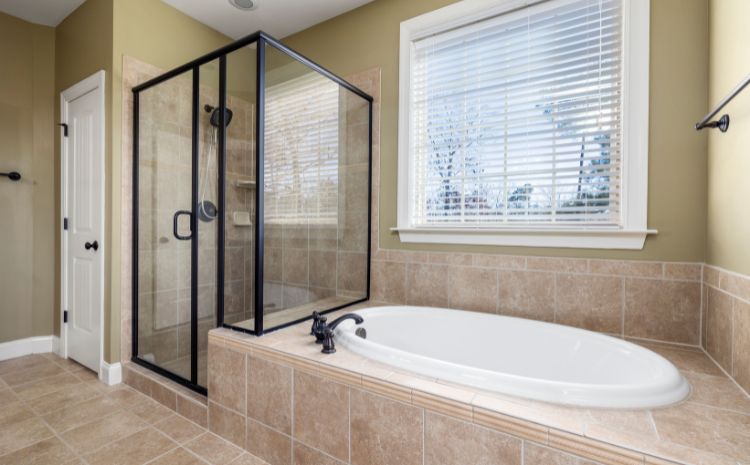
There's one question that comes up in nearly every bathroom consultation we run, usually within the first ten minutes, usually in this exact form: "We never use the tub. Can we take it out — or will that kill us at resale?"
It's a good question, because both halves of it are true at once. Most adults genuinely don't use bathtubs. And bathtubs genuinely matter at resale — but in a much more specific way than the general anxiety suggests.
Here's the honest, complete answer: the rule that actually governs this decision, what buyers in the St. Louis market actually care about, what conversions cost in 2026, and how to decide for your specific house instead of from generalized internet fear.
The One-Tub Rule
Strip away the noise and the resale reality reduces to a single, widely-agreed principle among agents, appraisers, and remodelers:
Your home should keep at least one bathtub. Beyond that one, convert freely.
The reasoning is buyer arithmetic. The buyer segments who require a tub — families with babies and young children, buyers planning for them, some multigenerational households, and buyers for whom bathing is a mobility or medical matter — need a tub in the house. Almost none of them need it in the master bath specifically. Meanwhile the buyer segments who prefer walk-in showers — empty nesters, aging-in-place buyers, and frankly most adults under 55 too — treat a large walk-in shower in the master as an upgrade, not a compromise.
So the playbook that satisfies every buyer segment simultaneously:
- Master bath: convert to a generous walk-in shower with confidence. In our St. Louis projects, this is now the default request, and agents consistently report master walk-ins showing better than master tubs.
- Hall/family bath: keep the tub — ideally a quality tub/shower combination. This is where the one tub lives, and where tub-requiring buyers expect to find it.
- One-bathroom homes: keep the tub, full stop. A one-bath house with no tub excludes entire buyer categories, and that genuinely costs money at sale. Convert only if you're certain this is your forever configuration — and know the trade you're making.
That's the whole rule. Nearly every "removing a tub hurt our sale" story you'll hear traces back to violating it — the last tub in the house went away, not a tub.
What the Data and the Agents Actually Say
Some honest calibration on how much this matters, because internet discourse inflates it:
Master bath tub removal, when a tub remains elsewhere, has little to no measurable price effect in family-suburb markets like ours — and increasingly shows as a positive. National remodeling-impact surveys consistently rank bathroom renovations among the projects buyers respond to, and large walk-in showers rank at or near the top of desired bathroom features in recent buyer preference surveys. Meanwhile the freestanding-soaker-tub renaissance is real but selective: it photographs beautifully in large master baths and gets used a few times a year.
Where tubs still win: homes whose likely buyer is a young family. In Ballwin, Fenton, and St. Peters school-district neighborhoods, the hall-bath tub isn't optional — it's the exact fixture the next owner will bathe toddlers in. Keep it, and make it nice.
Where showers win outright: aging-in-place and empty-nester markets. Zero-threshold walk-in showers with benches and grab-bar blocking are the single most requested accessibility feature we install, and the demographic wave behind that demand is only building.
One more honest data point from the field: appraisers count bathrooms, not tubs. A full bath requires a tub or shower — converting doesn't change your bathroom count, your listing category, or your appraisal line items. The effect is entirely in buyer appeal, which is exactly why the one-tub rule resolves it.
What Conversions Cost in St. Louis in 2026
Tub-to-shower conversion within the existing footprint: $12,000 – $22,000. Tub out, proper waterproofing system in (this is where corners must never be cut — more below), tiled walls and pan or a quality low-threshold base, glass, fixtures, and the plumbing adjustments to convert a tub valve to a shower configuration. The range moves mainly on tile selection, glass (framed vs. frameless), and fixture tier.
Expanded walk-in shower (absorbing the tub footprint into a larger shower): $16,000 – $30,000. The signature master-bath move: a former 60" tub alcove plus adjacent space becomes a 4' x 5'+ walk-in with bench and niche. Adds tile area, often a linear drain, custom glass, and sometimes minor wall reframing.
The luxury both-and: $30,000+. In master baths with the square footage, keeping a freestanding soaker and building the big walk-in ends the debate entirely. This only makes sense in genuinely large baths — crowding both into inadequate space produces a bathroom that does two things badly.
A warning on the $4,000-$8,000 "one-day conversion" offers you'll see advertised: acrylic panel systems glued over existing surrounds have their place (rental units, tight budgets, genuinely sound existing substrates), but they are not comparable products to a rebuilt, properly waterproofed tiled shower — and buyers' inspectors know the difference. Mid-market and up, the panel-over conversion can read as a shortcut at exactly the moment you're trying to impress.
The Part Nobody Discusses: Waterproofing Is the Actual Project
Here's the contractor's-eye view of conversions: the tile is decoration; the waterproofing system is the project. Showers move dramatically more water at walls than tubs do, and the single most common source of catastrophic bathroom damage we encounter is a converted shower built like it was still a tub surround.
A proper conversion includes a modern bonded waterproofing system (sheet-membrane or liquid-applied — Schluter, Wedi, Laticrete and comparable systems), correctly sloped pan construction, flood testing before tile, and niche/bench details built into the membrane system rather than cut into it afterward. This is invisible at the open house and decisive five years later.
When comparing conversion quotes, ask one question: "Walk me through your waterproofing system and whether you flood-test." The answer separates the $12,000 quote that's a value from the $8,500 quote that's a future insurance claim.
How to Decide for Your House
The decision tree we walk clients through:
1. How many tubs does the house have now? Two or more → convert the master freely; the rule is satisfied. Exactly one, and it's the one you want gone → pause on the questions below.
2. Who buys your house next? Look at your neighborhood honestly. Young-family school district → the last tub stays. Empty-nester villa, condo, or downsizer market → a well-designed walk-in may genuinely outperform the tub even as the only bathing fixture, though we'd still counsel keeping one tub when layout allows.
3. What's your timeline in the home? Staying 10+ years → design for your actual life, heavily weighted; you can always address resale later, and bathroom finishes will be due for refresh by then anyway. Selling within 2-3 years → weight the buyer math heavily and stay inside the rule.
4. Any aging-in-place horizon? If this is the house you intend to grow old in, the zero-threshold walk-in isn't a preference — it's infrastructure. Build it with blocking for future grab bars (costs almost nothing during construction), a bench, and a handheld. Your 78-year-old self will regard it as the best money the remodel spent.
Frequently Asked Questions
We have one bathroom and never take baths. Is converting really that bad?
It's a real trade, stated honestly: you'll gain daily function and lose a slice of the buyer pool at sale. If you're staying long-term, your daily life should win. If a sale is plausible within a few years in a family neighborhood, keep a tub/shower combo — modern ones are far better looking than what you likely have now, and they preserve both functions.
Do buyers actually check for a tub, or is this agent folklore?
Family buyers genuinely do — "where will we bathe the baby" is a spoken question at showings. It's less folklore than it is segment-specific: it never comes up with downsizers and always comes up with strollers in the foyer. Which is the entire logic of keeping the tub in the hall bath.
Is a tub-to-shower conversion a good project right before listing?
Usually not as a resale play — you'll spend $15,000 to add roughly $8,000-$12,000 of appeal. Pre-listing money goes further on paint, fixtures, glass, lighting, and re-grouting. Convert because you'll live with it; refresh because you're selling.
What about jetted tubs — keep or remove?
Remove without grief. The 1990s jetted tub is arguably a negative at showings now (buyers see maintenance and dated styling), and its footprint is exactly what your expanded walk-in shower wants. This is the single most satisfying conversion category we do.
Does a walk-in shower need a door, or are open/doorless designs okay here?
Doorless works when the shower is large enough (roughly 4' x 6'+ with proper splash zones) and the bathroom has decent heat — a real consideration in St. Louis winters; open showers in small baths are cold and wet-floored. Frameless glass gives the open look with the comfort. Design detail, not resale factor, but it affects daily satisfaction more than most tile decisions.
Get a Straight Answer for Your Bathroom
Bring us the actual question — your house, your bathroom count, your timeline, your neighborhood — and you'll get a straight answer: convert, keep, or the design that does both. Then real pricing for whichever answer fits.
Covenant Contracting remodels bathrooms across the St. Louis metro — Fenton, Wildwood, Ballwin, Chesterfield, St. Peters, Grover, Valley Park, and surrounding areas. Free consultations, honest resale talk included.
Request Your Free Bathroom Consultation →
Or call (314) 282-1991.