How to Host the Perfect 4th of July Backyard (And What Your Deck Should Be Doing for You)
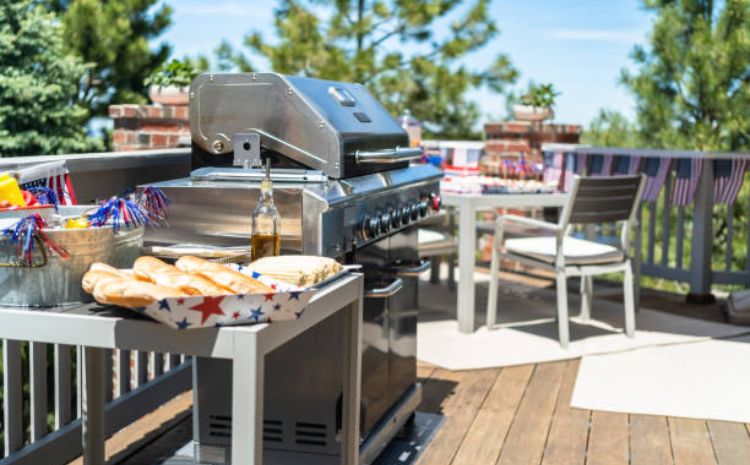
Happy Independence Day. If you’re hosting a few people in the backyard tonight, or wishing you could, this one’s for you.
Some of the best memories St. Louis families make happen in their own backyards on summer evenings like this one. Kids running through sprinklers. Burgers on the grill. Adults nursing drinks while the sun gets low. Fireworks in the distance after dark.
The backyard either works for these moments or it works against them. Here’s how to make the most of what you have today, and a few honest thoughts on what might be worth improving before next summer.
Making Tonight Work With What You’ve Got
Most homeowners don’t need a full deck overhaul to host well tonight. A few tactical moves go a long way.
Set up zones, not one big crowd. Even on a modest deck or patio, divide the space mentally. One zone for food (grill plus a folding table for serving). One zone for seating (chairs in a loose circle, not facing each other like a job interview). One zone for kids if applicable (lawn space, sprinkler, sidewalk chalk). People naturally move between zones, conversation flows better, and the space feels bigger than it is.
Light it before you need to. If your gathering runs past 8:30 PM, lighting matters. String lights are the easiest win — clip them to a tree branch, a fence post, or your deck railing. A few solar pathway lights make walking around safer after dark. Battery-powered lanterns work great on tables.
Manage the bugs. St. Louis mosquitoes peak in early July, and a backyard gathering can turn miserable around 7 PM if you don’t plan for them. Citronella candles help on the table. Fans push air around (mosquitoes are weak fliers — even a small standing fan creates a “no fly zone”). A spray-down of the yard 30 minutes before guests arrive cuts the population significantly. Don’t rely on personal repellent alone.
Pre-grill before guests arrive. This sounds counterintuitive, but trust us. Start your grill 20 minutes before people show up and have the first round of burgers or hot dogs already going. Hungry guests show up, food is ready or close, and you’re not stuck at the grill for the first hour while everyone watches you.
Keep the cooler accessible. A cooler on the deck or patio, near where people naturally gather, means you’re not running inside every 10 minutes. Refill ice once before guests arrive. Drinks should be self-serve.
Have a backup plan for weather. This is St. Louis. The forecast says clear and then a pop-up storm rolls in at 7. Know where everyone moves to if rain starts — covered porch, garage, basement, whatever you’ve got. Tell guests at the start (“if it rains, we’ll head to the garage”) so it’s not chaotic.
What Backyard Spaces That Actually Work Have in Common
You don’t need a magazine-feature backyard to host well. But after seeing hundreds of St. Louis backyards, here’s what the ones that really work tend to share.
Enough flat space for furniture. This sounds obvious. It isn’t. A lot of decks are sized for furniture from 1995, when patio sets were smaller and people had fewer of them. A modern outdoor sectional and dining table for six need 200+ square feet of usable flat space minimum, and that’s tight. Most deck overhauls we recommend are about square footage as much as anything else.
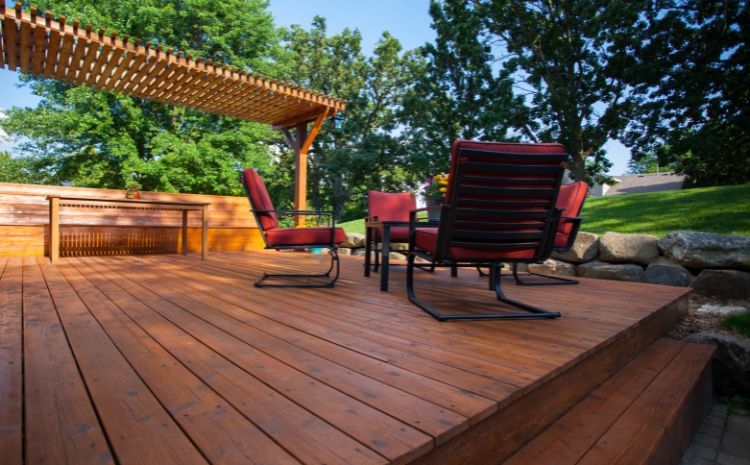
A roof or shade over part of it. Whether it’s a pergola, a covered porch section, or even a large patio umbrella, having shade transforms a backyard. The unshaded portion of your deck is unusable from about 11 AM to 5 PM in July. Shade extends the usable hours and the usable seasons.
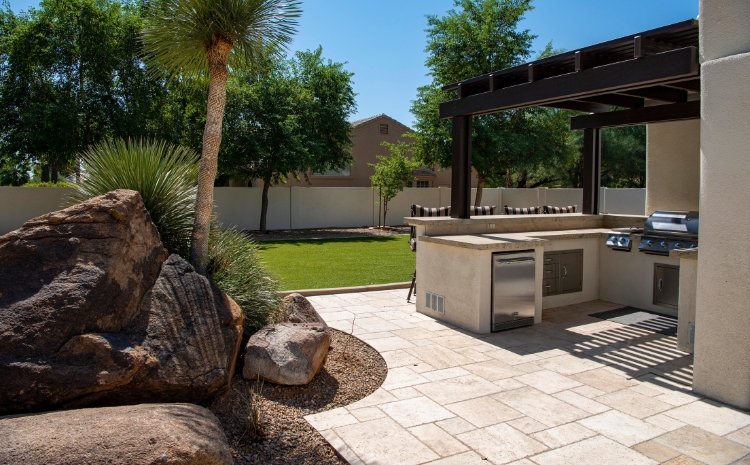
A real cooking setup. A grill on a deck is the minimum. A built-in grill with prep counter space is dramatically better. A full outdoor kitchen with a fridge and sink is in a different league entirely. You don’t have to go full kitchen — but if you grill more than once a week, a built-in setup pays for itself in how often you actually use it.
Lighting that wasn’t an afterthought. Beautiful lighting after dark turns “the backyard” into “outdoor living space.” Mixed sources — overhead string lights, accent lighting on plants, soft lighting along pathways, table lamps that run on batteries — make the space feel intentional after sunset.
Seating that invites lingering. Hard chairs at a table are fine for dinner. They don’t keep people outside after dinner. Built-in benches with weather-resistant cushions, lounge seating around a fire pit, or comfortable outdoor sectionals are what get people to stay until 11 PM instead of heading inside at 9.
A focal point. The best backyards have something that draws people. A fire pit. An outdoor fireplace. A water feature. An outdoor TV for game nights. The focal point gives the space purpose beyond just “outside.”
What’s Worth Upgrading Before Next Summer
If you’re sitting in your backyard tonight wishing it worked better, here’s where we’d usually point homeowners thinking about upgrades.
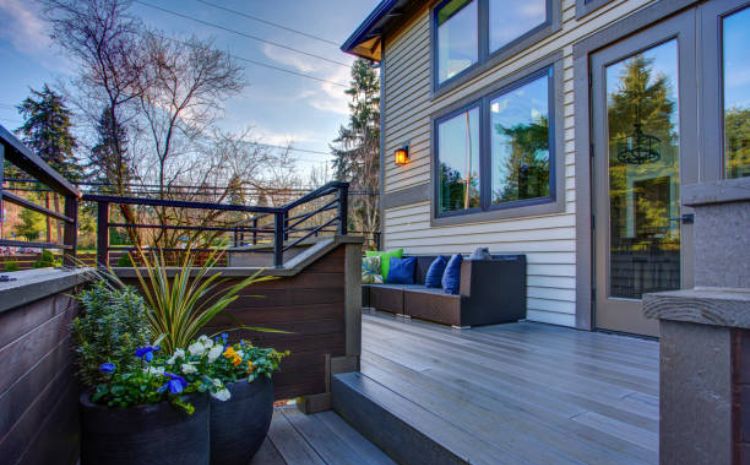
A bigger or better deck is the biggest single upgrade for most St. Louis homes — especially if your current deck is undersized, deteriorating, or doesn’t connect well to the home. Modern composite decks handle our weather beautifully and require essentially no maintenance, and a deck addition is consistently one of the better-returning exterior projects at resale.
A pergola or covered section turns a partially usable deck into a fully usable one. Pergolas are a relatively modest upgrade (typically $4,000–$12,000) that dramatically extends how often you can actually use the space.
Built-in seating and fire features add character and increase usable seating capacity. Built-in benches double as storage. Built-in fire pits become the focal point we talked about above.
Outdoor kitchens are the highest-ticket outdoor upgrade and the one with the biggest lifestyle return for serious grillers. Real outdoor kitchens include a built-in grill, prep counter, mini-fridge, often a sink — and they completely change how you cook and host.
Lighting and electrical is the underrated upgrade. Most decks have one weatherproof outlet (if any) and zero designed lighting. A real outdoor electrical plan with multiple outlets, low-voltage landscape lighting, and proper deck lighting makes evening entertaining infinitely better.
Privacy elements are huge for homeowners on smaller lots or with close neighbors. Privacy screens, strategic plantings, lattice with vines, or built-in pergola screens give you a backyard that feels like your own rather than something everyone can see into.
Realistic Cost of Doing It Right
For St. Louis homeowners thinking seriously about outdoor living upgrades, here’s how the numbers typically work in 2026:
- Deck replacement (composite, 300–500 sq ft): $25,000–$50,000
- Pergola addition (12×14 cedar pergola): $4,500–$11,000
- Built-in fire pit area (gas, with surround): $6,000–$14,000
- Outdoor kitchen (real built-in, fridge, prep space): $25,000–$75,000
- Covered porch addition (real roof, structural): $30,000–$70,000
- Privacy fence and screening: $5,000–$18,000 depending on linear footage
- Outdoor lighting and electrical plan: $2,500–$8,000
Most homeowners doing a full backyard transformation land in the $50,000–$120,000 range when combining multiple upgrades. Smaller, targeted upgrades (just a deck refresh, just a pergola) are much more accessible.
The good news for July: anything started in the next few weeks can be done before October. Outdoor projects move fast in summer when the weather cooperates, and contractors aren’t yet overloaded with fall booking.
Frequently Asked Questions
Can outdoor projects still get done before fall in St. Louis?
Yes, if you start now. Most decks, pergolas, and outdoor kitchen builds run 3–6 weeks from contract to completion. Starting in early to mid-July typically means finishing in August or early September.
What’s the most-used outdoor upgrade in St. Louis?
Honestly, just better deck space. Most St. Louis homes have undersized decks built decades ago that don’t fit modern furniture or modern entertaining. A right-sized deck with better connection to the home is the single most impactful upgrade for most homeowners.
Do I need a permit for backyard upgrades?
For most things attached to the home (decks, covered porches, pergolas attached to the house, outdoor electrical), yes. Freestanding fire pits, simple patios, and freestanding pergolas often don’t require permits, but check with your municipality. We handle all permitting for our clients.
What about HOA approval?
Many St. Louis HOAs require approval for visible exterior changes. Always check before starting design work. Permits and HOA approval typically run parallel and add 3–6 weeks to the front of a project.
Should I DIY any of this?
Painting your deck, planting privacy landscaping, hanging string lights — sure. Anything structural, electrical, or involving permits is better left to professionals. The cost of fixing DIY structural mistakes usually exceeds the cost of having it done right the first time.
Enjoy Your 4th — Then Let’s Talk About Next Summer
Hope your evening tonight is everything you want it to be. Burgers off the grill, kids running around, fireworks somewhere over the trees, that good summer-evening feeling. (If your own crew is lighting sparklers or fireworks tonight, the CPSC’s fireworks safety tips are a worthwhile two-minute read first.)
If you’re sitting in your backyard tonight thinking it could be better — bigger deck, real outdoor kitchen, a pergola for shade, a fire pit for fall evenings — we’d love to help. Covenant Contracting builds custom decks, outdoor kitchens, and outdoor living spaces across the St. Louis metro: Fenton, Wildwood, Ballwin, Chesterfield, St. Peters, Grover, Valley Park, and surrounding areas. Anything started now can be done well before October. You can see past work in our project gallery.
No rush — enjoy your weekend. When you’re ready, we’re here.
Request Your Free Outdoor Living Consultation →
Or call (314) 282-1991 to schedule directly, or explore our other services.