Kitchen Lighting Design: Layers, Placement, and Real Costs
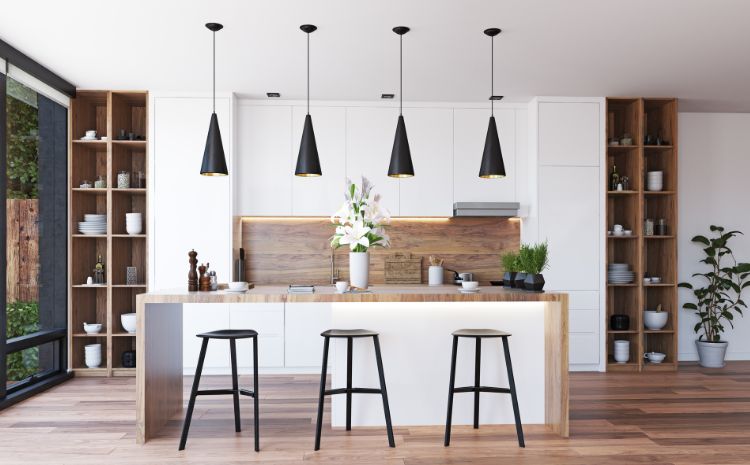
Here's a design secret hiding in plain sight: when a kitchen photo stops you mid-scroll, you're usually not reacting to the cabinets. You're reacting to the light — pendants glowing over the island, a washed backsplash, dimmed cans setting the mood layer. And when your own kitchen feels flat and shadowy despite decent finishes, that's the same variable running the other direction.
Most kitchens were built with one light source doing three jobs badly. This is the post that fixes the thinking — the three-layer framework, the placement math designers actually use, and what each piece costs whether you're retrofitting or remodeling. It lands now on purpose: it's the darkest-evenings stretch of the year, and lighting is the winter design season's favorite subject.
The Three Layers (Learn This and You Can't Unsee It)
Task lighting: light for hands. Where work happens — under-cabinet strips over counters, pendants over the island, a fixture over the sink. Its test is shadows: if your body blocks the ceiling light while you chop, your kitchen is missing its task layer. This is the layer the kitchen planning guidelines treat as non-negotiable: work surfaces lit directly, not incidentally.
Ambient lighting: light for the room. The general fill — typically recessed cans, done properly: spaced for even coverage (not a random grid), sized to the room, and always on dimmers. Ambient at 100% is an operating room; ambient at 40% under a task layer is a kitchen people gather in.
Accent lighting: light for feeling. The layer that separates "renovated" from "designed": toe-kick strips, lit glass cabinets, a washed backsplash, above-cabinet glow. Modest wattage, outsized character — this is why the pretty kitchens look expensive at night.
The rule: every kitchen deserves all three, on separate switches, each dimmable. The switch plan is the lighting design.
The Placement Math
Island pendants: the classic trio-over-island proportion — pendants roughly 30-36 inches above the counter, spaced evenly with real breathing room to the island's ends. Two large or three medium beats four crowded, and scale wins: undersized pendants over a big island is the most common miss in the metro. (If the island itself is the project, our island guide covers the electrical code that comes with it — the kitchen code and dimension guidance applies to the outlets and the lights alike.)
Under-cabinet: continuous LED strip or bar fixtures mounted at the cabinet's front edge, so light hits the working counter, not the wall. Warm color temperature matched to the room's other layers — mismatched whites are the fastest way to make new lighting feel off.
Recessed layout: cans positioned relative to counter edges — offset so you're never working in your own shadow — with spacing derived from ceiling height, not habit. And restraint: more cans is not more better; a ceiling of 14 cans at full blast is glare, not design.
The sink window seat: a dedicated fixture over the sink zone, because dishes happen at night and the window that lights it at noon is a black mirror at 8 PM.
What It Costs in St. Louis
The retrofit tier — new light, existing kitchen: $800 – $4,500. Plug-in or hardwired under-cabinet systems, pendant swaps at existing boxes, dimmer conversions, better bulbs and color-temperature discipline throughout. High impact, no drywall. A skilled electrician day or two.
The rewire tier — new positions, real switching: $3,500 – $10,000. Adding pendants where no box exists, correcting a bad can layout, separating circuits so the three layers actually switch independently, adding accent runs. Some ceiling patching and paint rides along — which is one more reason lighting pairs naturally with the painting scope from our refresh conversations.
Inside a remodel: budget $4,000 – $12,000 of the project for a properly designed lighting package — this is the line inside our $75K kitchen breakdown, expanded. During a remodel the marginal cost of great lighting over basic lighting is small, because the ceiling is already open; kitchens that skip it are saving pennies during the only cheap moment they'll ever have. (Tier ranges are new corpus figures — flagged.)
Where the money resists shortcuts: quality dimmers matched to LED loads (the flicker complaints all start with mismatches), and fixture-scale discipline over fixture-brand vanity — a well-scaled $150 pendant beats a cramped $600 one every time.
Lighting and Value, Briefly and Honestly
Lighting shows up in every listing photo and every twilight showing, and it flatters everything else you've spent on — the value data story for kitchens is really a story about perceived quality, and light is perception's delivery system. We'd never sell lighting as an "investment"; we'll absolutely tell you it's the cheapest line on the budget that changes how every other line looks.
Frequently Asked Questions
How much does kitchen lighting cost?
St. Louis: $800-$4,500 to retrofit layers into an existing kitchen; $3,500-$10,000 for rewiring with new positions and proper switching; $4,000-$12,000 as the lighting package inside a full remodel.
What is the best lighting layout for a kitchen?
Three layers on independent dimmable switches: task (under-cabinet, island pendants, sink), ambient (evenly planned recessed), accent (toe-kick, cabinet, backsplash). The layout follows the work zones and counter edges — not a ceiling grid.
How many pendant lights over an island?
Scale to the island: two large or three medium for most, hung roughly 30-36 inches above the counter with even spacing and end clearance. When in doubt, go larger and fewer.
Can I upgrade kitchen lighting without remodeling?
Absolutely — the retrofit tier exists for exactly this: under-cabinet systems, pendant and dimmer upgrades, and color-temperature correction transform a kitchen for well under $5K with zero demolition.
Light It Like You Meant It
Send us a photo of your kitchen at night — genuinely, at night — and we'll tell you which layers are missing, what the fix costs at each tier, and how it slots into any bigger kitchen plans on your horizon.
Covenant Contracting designs and builds kitchens across the St. Louis metro — Fenton, Wildwood, Ballwin, Chesterfield, St. Peters, Grover, Valley Park, and surrounding areas.
Request Your Free Lighting Consultation →
Or call (314) 282-1991.