Sunroom vs. Three-Season Room vs. Home Addition: What’s Right for Your St. Louis Home?
If you’re thinking about adding usable space to your St. Louis home, you’ve probably run into three terms that all sound vaguely similar: sunroom, three-season room, and home addition. They all expand your living space. They all cost real money. And they all do completely different things.
Choosing the wrong one is a frustrating mistake. We’ve worked with homeowners who paid for a sunroom and wished they’d built a real addition. Others who built a full addition and admit the simpler three-season room would have been perfect. The right choice depends on how you’ll actually use the space, what your home can support, and where you live.
This is the honest decision guide we walk every homeowner through.
The Quick Definitions
Before we get into specifics, here’s how we define each:
Sunroom: A glassed-in room — typically aluminum or vinyl framed, with large insulated windows on three sides. Some have heating and cooling, some don’t. Usually built on a deck-style foundation or slab. Lower-cost than a full addition.
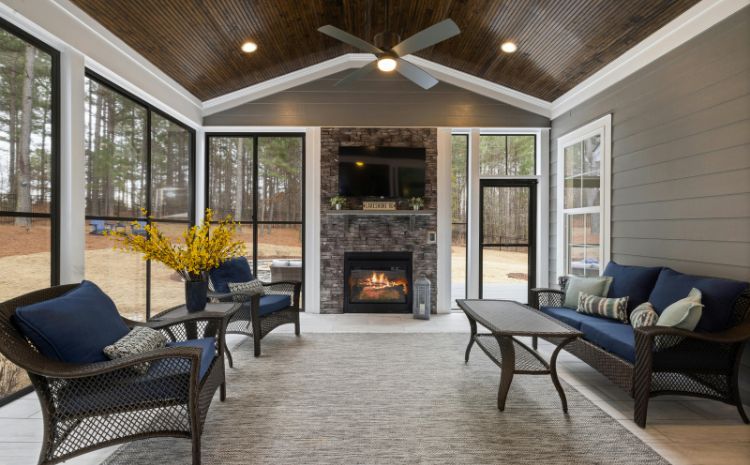
Three-season room: A more substantial structure than a sunroom — usually with screen panels (sometimes convertible to glass), real exterior walls on the home-side, and a real roof. Not heated. Used spring through fall.
Home addition: A real, fully integrated extension of your home — same foundation type, same roof system, same siding, full HVAC, electrical, insulation. Indistinguishable from the original house when complete.
These aren’t strict definitions across the industry — different contractors use the terms differently. What matters is what each option actually delivers, not what it’s called.
Sunroom: The Glass Room
A sunroom is what most people picture when they hear “sunroom” — a bright, mostly-glass room attached to the back of the home, typically built using a manufactured kit or system from companies like TEMO, Four Seasons, or Patio Enclosures.
What it actually is: A prefabricated or semi-prefabricated structure built on an existing or new foundation, framed in aluminum or vinyl, with large insulated glass panels on most exterior surfaces. It’s designed to feel like an outdoor space brought inside — sun, views, air-tight separation from weather.
The good:
- Fastest to build — many kits go up in 2–4 weeks
- Brightest possible space, with views in three directions
- Lowest cost path to “extra room” that’s usable year-round
- Great for hobbies, breakfast nooks, sitting rooms, plant rooms
- Adds visual appeal from the backyard
The honest downsides:
- Despite “year-round” marketing, most sunrooms are uncomfortable in St. Louis extremes — too hot in July, too cold in January, even with HVAC
- Energy efficiency is significantly lower than a real addition (lots of glass = lots of heat transfer)
- Doesn’t always blend visually with the original home — can look bolted on
- Adds less resale value than a real addition (typically 50–60% ROI vs. 65–75% for an addition)
- Lower-end sunroom kits can have condensation, leakage, and frame issues over time
Cost in St. Louis: $25,000 – $80,000 depending on size, foundation, materials, and HVAC. A typical 12×16 sunroom on an existing deck or new slab usually lands around $40,000–$60,000.
Use it for: Plant rooms, hobby rooms, breakfast areas, casual sitting rooms. A space where you want light and views more than full integration with the home.
Three-Season Room: The Hybrid
Three-season rooms are the most under-considered option of the three. They’re a step up from a screened porch and a step below a full addition — and for many St. Louis homeowners, they’re actually the right answer.
What it actually is: A real framed structure with a proper roof, real exterior walls on the connection side, and screen or glass panels on the open sides. Often built with cedar or composite framing for warmth and durability. Some are convertible — screens in summer, swap panels for glass in fall, even with optional vinyl windows for limited winter use.
The good:
- Better integration with the home than a basic sunroom
- Real roof = no sun-baking in summer like a glass-roofed sunroom
- Convertible designs give you screened porch in May and glass-enclosed in October
- Costs less than a full addition
- Excellent for outdoor living without the bug problem (massive deal in St. Louis summers)
- Perfect transitional season space
The honest downsides:
- Not insulated for winter use — usable maybe 7–9 months of the year in St. Louis
- HVAC is limited — you can add heating but cooling a partially-screened space is impractical
- Doesn’t add to a home’s official heated square footage on appraisal
- Won’t function as a guest room, true family room, or anything requiring year-round comfort
Cost in St. Louis: $35,000 – $90,000 depending on size, level of finish, and whether the design is convertible. A typical 14×16 three-season room with quality finishes usually runs $55,000–$75,000.
Use it for: Outdoor entertaining without bugs, transitional sitting rooms, dining spaces, places to read or work in good weather. The St. Louis homeowner who genuinely uses the backyard 7+ months of the year often gets the most out of this option.
Home Addition: The Real Deal
A home addition is the most ambitious option — and the one that delivers the most. You’re not adding a separate structure. You’re extending the home itself.
What it actually is: A fully integrated extension matching your home’s existing foundation type, framing, roofing, siding, insulation, and HVAC systems. When done well, you can’t tell where the original home ends and the addition begins. Could be a single room (master suite, sunroom-style addition, family room) or a major expansion (kitchen extension, second-story addition).
The good:
- Full year-round comfort with proper heating, cooling, and insulation
- Adds to your home’s official square footage and appraisal value
- Can be designed for any purpose — bedroom, bathroom, family room, kitchen extension, master suite
- Indistinguishable from the original home when complete
- Best long-term ROI of the three options (typically 65–75%)
- Genuinely changes how the home functions for your family
The honest downsides:
- Most expensive option by a significant margin
- Longest timeline — typically 3–6 months from permit to completion
- More disruptive — often involves opening up an existing wall, sometimes multiple
- Permit and design process is more involved (architect or designer often needed)
- Requires coordination with HVAC, electrical, plumbing systems
Cost in St. Louis: $200 – $400 per square foot for typical residential additions. A 300-square-foot addition (a generous family room or master suite) typically runs $80,000–$140,000. A larger 600-square-foot addition runs $120,000–$240,000+. Adding a second story is its own pricing tier — $250,000–$500,000+ depending on scope.
Use it for: Genuine new living space — bedrooms, bathrooms, family rooms, kitchen extensions. Anywhere you need real, integrated, year-round space.
How to Decide: The Honest Conversation
Here’s how we walk homeowners through the decision in real consultations.
Question 1: What will you actually use it for?
This is the biggest question, and homeowners often answer it wrong. They imagine using a sunroom year-round when they really want a 7-month outdoor space (three-season room would have been better). Or they want a family room and build a sunroom (real addition would have been better).
Be specific about use:
- Reading and morning coffee → Sunroom or three-season room
- Hosting family dinners year-round → Real addition
- Summer entertaining without bugs → Three-season room
- Master suite or guest bedroom → Real addition
- Plant room / sun-loving hobbies → Sunroom
- Watching football in November → Real addition
- Informal sitting area for spring/fall → Three-season room
Question 2: Do you need to add to your home’s square footage?
If you’re planning to sell within 5 years, real square footage matters more than usable space. A three-season room and a sunroom add usable space but don’t always count in appraisal square footage. A real addition does.
If you’re staying long-term and just want the lifestyle benefit, this matters less.
Question 3: What’s your budget — and what does the budget actually buy?
A $50,000 budget gets you:
- A nice sunroom
- A modest three-season room
- Not enough for most real additions
A $100,000 budget gets you:
- A premium sunroom with high-end finishes
- A high-end three-season room with premium materials
- A modest real addition (300 sq ft, basic finish)
A $200,000 budget gets you:
- Premium tier of any of the three
- A substantial real addition with quality finishes (500–700 sq ft)
It’s not about which is “best” — it’s about what each budget actually delivers.
Question 4: What does your home support?
Some homes are ideally designed for additions. Others have layouts, foundations, or structural realities that make additions complicated and expensive. A few examples from our St. Louis work:
- A walkout basement on a sloped lot can make a ground-floor addition expensive (foundation work)
- A second-story addition over an attached garage often works well in suburban homes
- Older homes with mixed-era construction sometimes have addition complications (ceiling heights, electrical capacity, plumbing routing)
- A home with a back-of-house deck already in place is often a perfect candidate for a sunroom or three-season room
A walk-through with a contractor can tell you within 30 minutes whether your home is well-suited to one option or another.
What We See Most Often in St. Louis
Across our work in Fenton, Wildwood, Ballwin, Chesterfield, St. Peters, and the broader metro:
Three-season rooms are the most common addition for homeowners who already use their backyard heavily and want to extend that use 6–8 months of the year. Often built off existing decks.
Sunrooms work well in homes where the homeowner specifically wants a bright, plant-friendly, view-focused space and is okay with the energy trade-offs.
Real additions make the most sense when the home is genuinely undersized for the family, when adding a master suite or full bathroom matters, or when long-term value is a priority.
Most homeowners benefit from being honest about whether their goal is “I want more room” (real addition usually wins) vs. “I want more outdoor enjoyment” (three-season room or sunroom often wins).
Frequently Asked Questions
How long does each option take to build?
Sunroom: 2–6 weeks. Three-season room: 4–8 weeks. Real addition: 3–6 months (sometimes longer for complex projects).
Do all three require permits in St. Louis?
Yes. Any structure attached to your home requires a permit in essentially every St. Louis-area municipality. We handle the permit process for clients.
Will an addition mess up my existing home?
Done well, no — the result looks fully integrated. There is disruption during construction (an exterior wall is opened, dust gets everywhere, contractors are working in your home), but the finished product should look like it was always there.
Can I add HVAC to a three-season room later?
Adding heating later is usually possible. Adding full heating and cooling and proper insulation often requires upgrading the structure significantly — at which point you’re approaching the cost of a real addition. Easier to design for the right purpose from the start.
What’s the most common regret?
Building a sunroom and then realizing you wanted real year-round space. Glass-heavy sunrooms in St. Louis often disappoint in extreme weather, even with HVAC. The second most common: building a full addition and admitting the simpler three-season room would have been perfect for how they actually use the space.
Let’s Figure Out What’s Right for Your Home
There’s no universal “best” choice — there’s the right choice for your home, your family, your lifestyle, and your budget. The decision deserves a real conversation with someone who’s built all three.
Covenant Contracting offers free in-home consultations across the St. Louis metro — Fenton, Wildwood, Ballwin, Chesterfield, St. Peters, Grover, Valley Park, and surrounding areas. We’ll walk your home, talk through how you’d actually use the space, look at what your home structurally supports, and give you a real recommendation. No pressure, no hard sell.
Request Your free estimate and check out our services or call (314) 282-1991 to schedule directly.