Before You Renovate Your Whole House in St. Louis: 9 Things We Wish Every Homeowner Knew
A whole-house renovation is one of the biggest decisions a homeowner ever makes. The dollars are significant, the disruption is real, and the choices you make in the first few weeks shape everything that follows for the next 6–12 months.
We’ve guided hundreds of St. Louis families through major renovations — full main-floor reworks, kitchen-bath-living combinations, gut renovations of 1920s craftsman homes, modernizations of 1980s ranches. The patterns are remarkably consistent. The homeowners who end up happy followed certain principles. The ones who ended up frustrated almost always made the same handful of avoidable mistakes.
Here’s what we’d tell every homeowner before they sign a single contract.
1. Know Your Real Budget Before Anyone Quotes the Project
The most important number in your renovation isn’t what your contractor quotes. It’s what you can actually afford — and that’s a separate calculation.
- Know your total available funds (savings, HELOC capacity, financing options)
- Reserve 15–20% of total budget as a contingency for surprises
- Consider what you’ll spend during construction (eating out, temporary housing if needed)
- Be honest about whether you’re stretching financially
Renovations have a way of growing during the process. The kitchen turns into kitchen-plus-dining-room. The master bath turns into the entire upstairs. Without a hard ceiling, projects expand to fill the budget — and then some.
The homeowners who finish renovations without financial stress are the ones who set a real budget at the start and treat it as a constraint, not a target.
2. The Cheapest Quote Is Almost Never the Best Value
If you get three contractor quotes for a whole-house renovation and one is significantly lower than the others, something’s wrong. Either:
- The scope is different (they’re quoting less work)
- The materials are downgraded (cheaper cabinets, lower-end finishes)
- The labor is undervalued (less experienced crews, faster work, lower quality)
- The contingencies are missing (no allowance for surprises, change orders inevitable)
- The contractor is undercapitalized (which means cash flow problems mid-project)
Value matters more than price on a project this size. A $25,000 difference between the lowest and highest quote on a $300,000 renovation isn’t really $25,000 — it’s the difference between a finished project that holds up for 25 years and one with quality issues you’ll be addressing for the next decade.
The right comparison isn’t “which is cheapest” — it’s “which gives me the most for my budget, with a contractor I trust.”
3. Living Through Construction Is Harder Than You Think
We’ve had homeowners tell us, with full confidence, “We can stay in the house through anything. It’ll be fine.” Six weeks later, those same homeowners are checking into a hotel.
Reality check on what whole-house renovations actually involve:
- Months of dust, even with sealed-off work areas
- Loss of kitchen for 2–3 months (often longer)
- Loss of master bathroom for 4–6 weeks
- Crews in the home most weekdays, starting at 7–8 AM
- Power and water shut off intermittently
- Constant noise during work hours
- Furniture moved, stored, covered
- Schedule disruption — can’t have people over, can’t host
Some families handle this fine. Others find it genuinely exhausting after a few weeks, especially with young kids, work-from-home schedules, or pets.
Plan upfront whether you’ll stay or temporarily move out. If staying, set up a livable “zone” that’s protected — usually a bedroom suite or a finished basement. If moving out, factor 3–6 months of housing into your budget. Either is fine; both can work. Just decide intentionally.
4. Your Older Home Has Surprises Behind the Walls
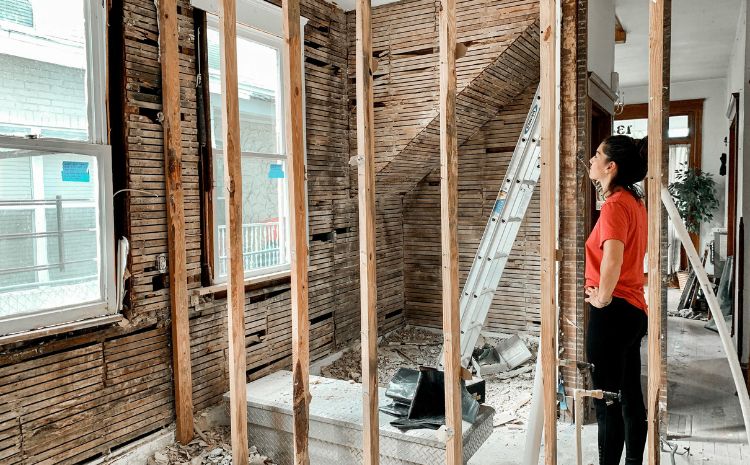
If you own an older home in St. Louis — anything pre-1990, especially pre-1970 — there are things in your walls you don’t know about. Some are minor. Some can shift the project significantly.
Common surprises in older St. Louis homes:
- Knob-and-tube wiring in homes built before 1950, sometimes still in use, often unsafe by modern code
- Galvanized supply lines that look fine but are corroded internally and reduce water pressure
- Cast iron drain stacks that work today but may fail in 5–10 years
- Asbestos in flooring, pipe wrap, or popcorn ceilings (homes built before 1980)
- Lead paint in homes built before 1978
- Undersized electrical service (60-amp or 100-amp panels in homes that need 200-amp)
- Foundation issues discovered when finishing the basement
- Plaster walls that crack when adjacent walls are removed
- Out-of-square framing that complicates new cabinetry, tile, and trim
- Original windows that fail when surrounding work disturbs them
A good contractor anticipates this and builds reasonable contingencies into the budget. A bad one quotes optimistically and hits you with change orders mid-project.
Ask your contractor directly: “What’s your contingency plan for surprises in the walls?” The answer tells you a lot.
5. Design Decisions Should Be 90% Done Before Demo Begins
The single biggest cause of renovation chaos is making design decisions on the fly during construction.
Before demo starts, you should have:
- All cabinet selections finalized and ordered
- Countertop slabs selected
- All tile selected (kitchen, bathrooms, backsplashes)
- All plumbing fixtures finalized
- All lighting selected
- All flooring selected
- Paint colors selected
- Hardware selected
- Appliance models selected
Why this matters: cabinetry takes 8–12 weeks to manufacture. If you haven’t selected cabinets when demo begins, you’re going to have a 6-week dead period in the middle of your project where work has to pause. This kills schedules and morale.
The pre-construction design phase usually takes 4–8 weeks. Build that into your timeline. Don’t pressure your contractor to start demo before you’re ready — it just delays things later.
6. Permits Take Longer Than You Expect — Plan Accordingly
Every St. Louis municipality has its own permit process and timeline. Some are fast (3–4 weeks). Others are notoriously slow (8–12 weeks). Major renovations often require:
- Building permit
- Electrical permit
- Plumbing permit
- Mechanical (HVAC) permit
- Sometimes: zoning review, historic district review (for older neighborhoods like Lafayette Square or the Central West End), HOA approval
Architects, engineers, and structural calculations are often required for any project involving load-bearing wall removal or structural changes.
Don’t expect to walk into a building department and walk out with a permit the same day. Build at least 4–8 weeks into your timeline for the permit process before construction can begin.
A reputable contractor handles the permit process and knows the local jurisdictions. If a contractor suggests skipping permits “to save time and money,” walk away. Unpermitted work creates serious problems at resale, with insurance, and with code enforcement.
7. Choose Your Contractor for the Right Reasons
The wrong reasons to choose a contractor:
- They were the cheapest
- They had the prettiest website
- They could start the soonest
- They told you what you wanted to hear
The right reasons:
- Experience with similar projects. Whole-house renovations are different from single-room remodels. Make sure the contractor has done multiple comparable projects.
- Transparent communication. They explain what they’re doing, why, and what could go wrong. They tell you no when no is the right answer.
- Real local presence. They have a physical office, a real team, and references you can drive by.
- Project management capability. Whole-house renovations involve scheduling 15–20 trades. Whoever runs the project needs to genuinely run it, not show up once a week.
- Financial stability. They pay their subs on time. Their subs talk well of them. They don’t ask for unreasonable advances.
- Written, detailed contracts. Scope, materials, allowances, schedule, change-order process, payment terms, warranty — all in writing.
Ask for at least three references from projects completed in the last 12 months. Call them. Ask what went well and what didn’t. Drive by completed projects if possible. This is how you separate marketing from reality.
8. Communication Frequency Should Be Set From Day One
The single biggest cause of renovation frustration we see — bigger than budget overruns or timeline slips — is communication breakdowns.
Establish at the start of the project:
- Who is your primary point of contact (project manager, owner, foreman)?
- How often will you have formal updates (weekly meeting, weekly email)?
- How are decisions documented (email, signed change orders)?
- What’s the response time expectation for questions?
- What’s the process when something unexpected comes up?
Get all of this in writing. Verbal “we’ll keep you in the loop” promises evaporate when the project gets busy.
Weekly site walks with your project manager are the gold standard for whole-house renovations. You see progress, ask questions, catch issues early, and stay aligned.
9. Build Relationships With Your Crew, But Stay Professional
You’re going to see these people more than you see your friends for the next 4–6 months. They’ll be in your home daily. You’ll see them in jeans, in the rain, eating lunch in the driveway, taking calls about other projects.
Most renovation crews are skilled professionals doing physical work for a living. They appreciate:
- Being treated like professionals
- Coffee occasionally (we won’t say no)
- Clear access to power, water, and a clean bathroom
- Being told what you want directly, not through layers of communication
What doesn’t help:
- Daily Pinterest changes (“can we just move that one inch…”)
- Treating them like servants or being condescending
- Adversarial energy when issues come up
- Communicating only through angry emails
The best renovation experiences happen when there’s mutual respect between homeowner, contractor, and crew. This is a working relationship that lasts months — invest in it like one.
What a Good Renovation Process Actually Looks Like
For perspective, here’s the typical timeline of a well-run whole-house renovation in St. Louis:
- Weeks 1–4: Initial consultation, design conversations, scope finalization
- Weeks 4–10: Detailed design, material selections, finalized contracts
- Weeks 8–14: Permits pulled, materials ordered, schedule finalized
- Weeks 14–18: Demo and rough-in (framing, electrical, plumbing, HVAC)
- Weeks 18–24: Inspections, drywall, flooring, cabinets installed
- Weeks 24–30: Tile, countertops, painting, lighting, fixtures
- Weeks 30–32: Punch list, final inspection, walkthrough, completion
Eight months from first conversation to handing over the keys, on a typical major renovation. Faster projects exist. Slower ones do too. This is a realistic expectation, not a worst case.
Frequently Asked Questions
Should we move out during a whole-house renovation?
Strongly consider it. Many homeowners stay through and report it was harder than they expected. If you have young kids, work from home, or strong noise sensitivity, moving out is often worth it. If you’re flexible and the work zones can be sealed off, staying is doable.
How much should we budget for surprises?
15–20% of the project budget is a reasonable contingency. For older homes (pre-1970), 20–25% is safer. Money you don’t use can go toward upgrades during the project; money you don’t have causes real problems.
Do we need an architect?
For projects involving load-bearing wall removal, additions, or significant structural changes — yes, you’ll need either an architect or a structural engineer to stamp the plans. For interior-only remodels with no structural changes, a good contractor can often handle design in-house or with a partner designer.
What about during the project — can we change our minds?
Yes, but every change order has a cost (in dollars and schedule). Changes during construction always cost more than getting it right in design. Try to lock decisions before demo and resist the urge to “just add this one thing” mid-project.
How do we know we’re working with the right contractor?
The single best test: how do they handle disagreements during the design phase? A contractor who pushes back constructively, explains their reasoning, and offers alternatives is showing you how they’ll handle issues during construction. A contractor who tells you yes to everything is going to either run over budget or cut corners later.
Let’s Talk About Your Home
A whole-house renovation isn’t just a project — it’s 6–9 months of your life and a significant investment in your home. The right contractor isn’t just a service provider. They’re a partner you trust to walk you through every decision, surprise, and milestone.
Covenant Contracting has been guiding St. Louis families through whole-house renovations for years. We work across the metro — Fenton, Wildwood, Ballwin, Chesterfield, St. Peters, Grover, Valley Park, and surrounding areas. Our consultations are free, no-pressure, and focused on understanding what you actually want before we ever talk price.
Request Your Free Renovation Consultation and check out our other services or call (314) 282-1991 to schedule directly.