Why Fall Is Actually Prime Siding Season in Missouri
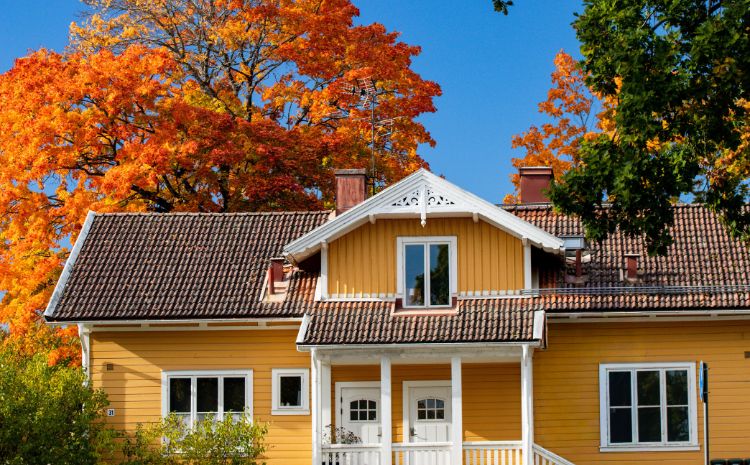
Ask homeowners when siding gets replaced and the answer is summer — it's an outdoor project, so it must belong to the outdoor season. Ask the crews who actually install it, and you'll hear something different: the best siding jobs of the year happen in fall.
This isn't contrarian marketing. It's material science plus working conditions plus a scheduling quirk, and it's the reason our September-November siding calendar fills with the projects that go smoothest. If your siding conversation has been simmering — maybe since our hail-damage siding post in August, maybe since the energy-bill discussion in July — here's why fall is the window, and the honest calendar for getting it done before winter.
The Material Science: Why Siding Prefers 50-70°F
Every common siding material has a temperature personality, and fall's moderate range suits all of them better than summer's extremes:
Vinyl siding is the dramatic one. Vinyl expands and contracts significantly with temperature — a 12-foot panel can move a quarter inch or more across Missouri's annual temperature swing. Installers accommodate this by nailing loosely (panels must float) and gapping at trim. Here's the problem with extreme-weather installation: panels installed at 95°F are at maximum expansion — come January, they contract hard, and if the installer didn't perfectly account for it, you get stress at fasteners, gaps at receivers, and the wavy, oil-canned look of siding fighting itself. Panels installed at 20°F are brittle (cold vinyl cracks when nailed) and at maximum contraction, risking buckling in July. Fall's 50-70°F installs the panel near the middle of its expansion range — the least-stress position for its entire service life, with forgiving workability. This is straight from manufacturer installation specs: moderate-temperature installation is the ideal case.
Fiber cement (James Hardie) prefers moderate weather for different reasons. The material itself is dimensionally stable, but its installation involves cutting (dust control), caulking and sealants (which have temperature application ranges, typically 40°F+), and touch-up paint on cut edges (same). Fall conditions sit comfortably inside every one of those windows — no cold-weather sealant failures, no heat-stressed caulk joints.
LP SmartSide and engineered wood: similar story — sealant and paint application windows, plus the material handles best out of extreme heat.
And the house wrap layer underneath — the weather barrier that's the actual waterproofing of your wall system — gets installed and taped best in moderate, dry conditions. Fall in St. Louis is statistically the driest season of the year, which means fewer weather delays and less exposure time between tear-off and dry-in.
The Working Conditions: Craft Quality Follows Comfort
An honest truth about construction that nobody puts in brochures: the quality of detail work tracks the conditions the humans are working in. Siding is a detail trade — flashing integration at every window, precise gapping, caulk lines, cut accuracy. Crews working 10-hour days at 95°F with sun bouncing off a reflective wall are managing heat; crews working at 62°F are managing craft.
Fall also delivers the longest uninterrupted work windows: no afternoon thunderstorm roulette (July's specialty), no early darkness yet (November's), no frozen-finger fastener work (January's). More consecutive productive hours means projects finish faster and with fewer weather-forced stopping points mid-wall — and continuous installation on a wall face is quietly a quality factor (consistent crew rhythm, consistent conditions across the face).
The Scheduling Quirk: You're Between the Rushes
Siding demand has two annual peaks: spring (winter damage discovered, project season energy) and post-storm surges whenever hail hits (per our August siding-claim post, which may be exactly what brought you here). Fall sits in the valley between — which means:
- Faster starts: September consultations routinely reach installation in 3-5 weeks versus spring's 6-10
- First-string crews: the best installers aren't triaged across a dozen storm jobs
- Material availability: distributor stock is healthiest between rushes; color/profile backorders are least likely
- Full-attention project management — the same shoulder-season dynamic from our fall outdoor projects post
One honest caveat: if a major hailstorm hits the metro in September or October, this valley disappears locally overnight — storm response consumes capacity. The homeowners who move early in September stay ahead of that possibility; it's another quiet argument for not waiting until late fall.
The Winter Payoff: New Siding Before Heating Season
Here's the fall-specific bonus that summer installations don't get: new siding delivers its energy benefits immediately into the season that needs them.
As we covered in July's siding-and-energy-bills post, a siding replacement is really a wall-system upgrade: continuous foam sheathing or insulated siding added during the project (a $2,000-$6,000 add that's dramatically cheaper during replacement than ever again), a properly sealed weather barrier, tightened penetrations, and new flashing. That package cuts infiltration — the drafty-wall feeling — and improves effective R-value right as heating season starts.
October completion means the improvement shows up in your November gas bill. A June installation waits five months to prove itself. Same project, better-timed payoff — and if your current siding has gaps, cracks (hail-cracked panels from August's storms, anyone?), or failed caulking, every winter week those stay open is infiltration you're paying for.
The Fall Siding Calendar, Honestly
How late can siding install in Missouri? Later than almost any exterior project — this is the pleasant surprise. Siding has no concrete, no cure times, and the material constraints are manageable: vinyl gets touchy below ~40°F (brittle, and crews adapt with careful handling), sealants and touch-up paints want 40°F+ application days. Practically:
- Contract by late September: installation in October — the perfect window, zero constraints
- Contract by late October: installation in November — still comfortably fine most years; sealant work scheduled to the warmer days
- Contract in December: honest answer — installable in mild stretches (and we do), but you're weather-window scheduling; for most homeowners, booking a firm early-spring slot beats winter roulette
- Storm-damage claims: these run on the insurance clock, not the season clock — approved claims install essentially year-round with cold-weather technique when needed (see the August claims posts for the process)
A typical full re-side (1,800-2,500 sq ft home) runs 1-2 weeks of installation once started — so even a mid-fall start is a completed project with margin.
What Fall Siding Projects Cost
Quick 2026 reference (full comparison in our Month 1 siding materials post):
- Vinyl replacement: $14,000 – $24,000 typical full re-side
- Insulated vinyl: $18,000 – $30,000
- LP SmartSide: $22,000 – $38,000
- James Hardie fiber cement: $28,000 – $48,000
Fall pricing is standard-season pricing — the advantage is schedule and conditions, not discounts (the honest shoulder-season pattern from our other fall posts). Insurance-funded projects, of course, run on claim economics — deductible out of pocket, scope per the adjusted claim.
Frequently Asked Questions
Is there any siding material that shouldn't be installed in fall?
No — fall is inside every major material's ideal window. The constraints arrive in winter: vinyl below ~40°F needs careful handling, sealants have application floors. October installation faces none of this. If anything, the material that most rewards fall installation is vinyl, for the mid-expansion-range reason above.
We have confirmed hail damage from August. Does the claim process fit inside the fall window?
Usually, if you move now: inspection and filing this month, adjustment in 2-4 weeks, installation 3-5 weeks after approval — that's a November completion from a September start. Per the August one-claim-rule post: get the full exterior scoped in one claim, and don't let the claim drift into the winter queue.
Can new siding really lower heating bills, or is that marketing?
The siding panel itself contributes modest R-value; the system installed with it — continuous foam, sealed weather barrier, new flashing, tightened penetrations — is where real infiltration reduction happens (July's post covers the numbers honestly). Homeowners replacing 25-year-old leaky wall cladding notice it; homeowners replacing 10-year-old intact siding for color reasons shouldn't expect a bill revolution.
Should we paint instead and re-side in a few years?
If the substrate is sound and the issue is cosmetic: quality exterior paint ($6,000-$12,000) is a legitimate 7-12 year play on wood and fiber cement. If panels are cracked, warped, moisture-stained, or the walls are drafty — painting over failing siding is buying time on a problem that compounds. An honest exterior assessment sorts this in one visit; we do them free.
Does fall installation affect siding warranties?
No. Manufacturer warranties require installation per specification — and per the material-science section above, fall conditions are the easiest season to hit every spec. Extreme-temperature installs are where spec violations (and warranty arguments) historically come from.
The Best Wall Weather of the Year Is Right Now
If siding has been on the list — whether from age, from August's hail, or from last winter's drafts — the next eight weeks are the year's best window to get it done, and done well.
Covenant Contracting replaces siding across the St. Louis metro — Fenton, Wildwood, Ballwin, Chesterfield, St. Peters, Grover, Valley Park, and surrounding areas. Free exterior assessments, honest material guidance, real fall scheduling.
Request Your Free Siding Assessment →
Or call (314) 282-1991.