Gutter Problems That Destroy Foundations (Check Before the Leaves Fall)

Nobody thinks about their gutters. That's not criticism — it's design. Gutters are the appendix of home systems: invisible when working, and most homeowners couldn't tell you if theirs are working or not.
Here's why we're asking you to think about them for the next five minutes: that aluminum trough is the first domino in a chain that ends at your foundation — and, if you've been following our basement series this month, at the moisture problems that make basements unfinishable. The majority of "wet basement" calls we assess trace back not to groundwater or foundation failure, but to roof water being delivered directly to the foundation by a gutter system that quietly stopped doing its one job.
With leaf season weeks away — the annual stress test every gutter system either passes or fails — here's the failure chain, the self-check, and the honest fix menu.
The Math Nobody Runs: Your Roof Is a Water Collector
Start with the number that reframes everything: one inch of rain on a 2,000 square foot roof produces roughly 1,200 gallons of water. A typical St. Louis thunderstorm dropping two inches sends about 2,500 gallons off your roof — in an hour or two.
Your gutter system's entire purpose is to collect that and discharge it away from the house. When it works, those gallons exit harmlessly 6-10 feet from the foundation. When it fails — clog, sag, disconnection, or the classic downspout-dumping-at-the-corner — those same gallons concentrate at the foundation line, storm after storm, soaking the soil column directly against your basement walls.
That's the whole story: gutters don't protect your roof (the roof is fine either way). Gutters protect the ground next to your foundation from your roof.
The Failure Chain, Link by Link
Link 1: The gutter fails quietly. Leaves and roof granules accumulate (this fall's drop is next spring's clog), seams separate, spikes back out, slope drifts until water ponds instead of flows. Or the simplest failure: a downspout extension gets knocked off by the mower in June and nobody notices.
Link 2: Water concentrates at the foundation. Overflow sheets down the wall at low points; disconnected downspouts pour their entire roof-section's collection at one corner. The soil against the foundation — which proper grading and discharge would keep relatively dry — becomes chronically saturated.
Link 3: The soil goes to work on the foundation. Saturated soil is the foundation's enemy twice over. First, hydrostatic pressure: waterlogged soil pushes water through every available path — the cove joint where slab meets wall, shrinkage cracks, tie holes. This is Category 2 from our moisture post, and it's frequently manufactured by Link 1 and 2 rather than being a groundwater problem at all. Second, in St. Louis's clay-heavy soils, the expansion-contraction cycle: clay swells wet and shrinks dry, and repeated cycling of the soil against your foundation is how settlement cracks, bowing pressure, and the freeze-thaw wedge (water in cracks expanding 9% when it freezes — the same physics from our fall roof post, aimed at your foundation) do their long work.
Link 4: The basement pays. Efflorescence blooming on the wall, the damp corner after storms, the tide line — the exact warning signs from our moisture post, with this specific origin story: the majority of them start at the gutter line, not the water table.
The chain's honest good news: it runs on years, not weeks — and every link is checkable and fixable, most of them cheaply. Which is the point of catching it in September.
The 20-Minute Fall Gutter Check
Companion to the fall roof check from two weeks ago — same rules, ground level, no ladder heroics:
During the next decent rain (the honest test — 10 minutes): - Walk the perimeter under an umbrella. Overflow anywhere — water sheeting over gutter edges — is a clog or capacity failure announcing its location. - Watch every downspout discharge. Full flow exiting the extensions, 6+ feet from the house? Or a trickle (clogged downspout) or a gush at the foundation (missing extension)? - Check for waterfalls behind gutters — water running down the fascia/siding means the gutter has pulled away or the drip edge isn't delivering into it.
On a dry day (10 minutes): - Sight down the gutter lines for sags, separated seams, and sections pulling from the fascia - Downspout inventory: every downspout connected top and bottom, every extension present and directing 6-10 feet out (or into functioning buried drains) - Ground evidence: erosion trenches, displaced mulch, or bare streaks under gutter lines and at downspout corners — the ground remembers every overflow you didn't see - Foundation-line scan: staining or chronic damp on the foundation face below any of the above - Basement cross-check: anything on your moisture-post checklist (efflorescence, damp corners) that maps to a gutter problem directly above it? That correlation is diagnosis.
The Fix Menu, Honestly Priced (2026)
Ordered by frequency of what actually solves the problem:
Cleaning and tune-up: $150 – $450. Full clear, reseal minor seams, re-secure hangers, verify slope. Twice a year (post-leaf-drop and spring) for tree-adjacent homes. The single highest-ROI maintenance dollar a house has.
Downspout extensions and discharge fixes: $100 – $600. The embarrassing champion of basement-water solutions — rigid extensions, splash blocks, or re-aiming discharge. We have genuinely resolved "wet basements" that other bids proposed $10,000 interior systems for, with $300 of downspout work. (Per the moisture post: surface water first, always.)
Buried downspout drains: $800 – $2,500. Discharge piped underground to daylight or a pop-up emitter well away from the house — the clean, mow-friendly version of extensions. Worth it when landscaping or slope makes surface extensions impractical. One caveat: buried drains clog too, and an overflowing buried drain hides its failure — annual flush-testing matters.
Sectional repairs and re-slope: $300 – $1,200. Fixing sags, re-hanging pulled sections, replacing damaged runs (including the hail-dented sections from your August storm claim, if that's your situation — dented gutters were probably on that claim's scope).
Gutter guards: $1,500 – $4,000 (typical whole-home, quality micro-mesh tier). The honest verdict: good guards dramatically reduce (not eliminate) maintenance on tree-heavy lots — you'll still want an annual check, and cheap guards (foam, brush) create their own problems. Worth it for heavily-treed properties and anyone done with ladders; skippable on open lots where a $200 annual cleaning does the job.
Full replacement (5" or 6" seamless): $1,800 – $4,500 typical. When systems are past repair — chronic separation, widespread corrosion, undersized for the roof. Two honest upgrade notes when you're replacing anyway: 6-inch gutters with 3x4 downspouts handle St. Louis thunderstorm rates dramatically better than builder-standard 5-inch/2x3 (modest cost delta, real capacity difference, the difference shows up in exactly the storms that matter), and downspout quantity matters as much as size — long runs need discharge points.
Grading corrections: $500 – $4,000. The partner fix from the moisture post — the first 10 feet of soil sloping away (6 inches of fall) finishes the job the gutters start. Gutters and grading are one system; assess them together.
Why This Is a September Post
Three converging clocks:
Leaf season is the stress test. The October-November drop will load every gutter in the metro. Systems cleaned and repaired before the drop handle it; systems entering leaf season already half-clogged fail by Thanksgiving — right as the cold rains arrive.
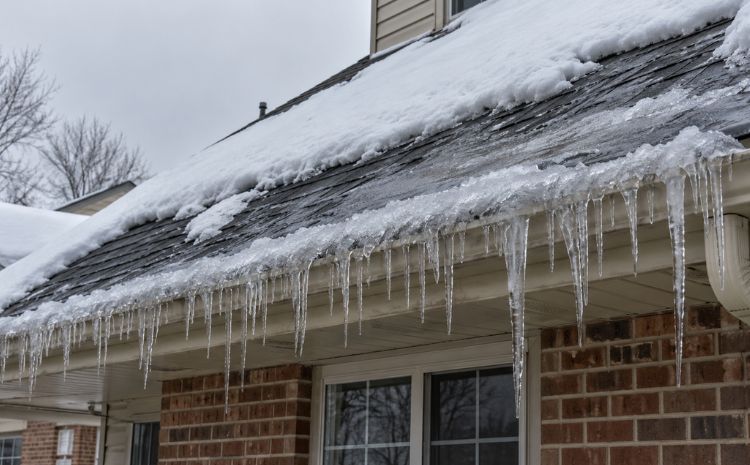
The freeze deadline. Every failure above gets worse in winter: clogged gutters become ice-filled gutters (weight, ice dams per the roof post, torn-off sections), and saturated foundation soil becomes the freeze-thaw wedge. Fall fixes are cheap prevention; February fixes are emergency response.
The basement connection. If a finished basement is in your plans — and if you've been reading this month, it may be — the gutter-and-grading assessment is literally step one of the moisture prerequisite. The $500 gutter fix in September might be the moisture remediation your project needed, at a tenth of the price of what gets proposed when the diagnosis skips the outside.
Frequently Asked Questions
How often do gutters actually need cleaning in St. Louis?
Tree-adjacent homes: twice yearly — after leaf-drop (late November) and spring. Open lots: annually, with post-storm spot checks. The post-leaf-drop clean is the non-negotiable one; it's what your gutters carry into winter.
Our basement gets damp at one corner every big storm. Gutters, really?
That pattern — specific location, storm-correlated — is the classic surface-water signature (Category 1 from the moisture post), and the first diagnostic is: what's directly above that corner? A downspout, more often than not. Check discharge during the next rain before anyone sells you an interior system. Sometimes it genuinely is more; the order of investigation is the point.
Are gutter guards a scam or worth it?
Neither, categorically — they're a maintenance-reduction product with a wide quality range. Quality micro-mesh on a heavily-treed lot: legitimate value. Any guard sold as "never think about gutters again": overpromise. And guards on a system that's undersized or badly sloped is a lid on a broken bucket — fix the system first.
Do we need bigger gutters or just cleaner ones?
Watch the honest test: if clean gutters still overflow in heavy rain, that's capacity (undersized gutters/downspouts or too few discharge points) — the 6-inch upgrade conversation. If they only overflow when clogged, that's maintenance. Most homes need the second; homes with big, steep roof planes feeding short gutter runs often genuinely need the first.
Can you check gutters during the roof inspection?
Yes — and we do, together, because they're one drainage system: roof planes, valleys, drip edge, gutters, downspouts, discharge, grading. The fall inspection from our earlier post covers the full path down; this post is why the bottom half of that path matters as much as the top.
Twenty Minutes Before the Leaves Beat You To It
Do the rain-day walk and the dry-day scan this month. If the system needs help — or if a damp basement corner has been quietly telling you something — the assessment is free, and the fix is almost always cheaper than what the water is planning.
Covenant Contracting assesses and repairs full exterior drainage — roofs, gutters, discharge, and grading — across the St. Louis metro: Fenton, Wildwood, Ballwin, Chesterfield, St. Peters, Grover, Valley Park, and surrounding areas.
Request Your Free Drainage Assessment →
Or call (314) 282-1991.