Fall Roof Inspection: The 30-Minute Check That Saves Winter Emergencies

Every January, we take the same phone calls. Water stain spreading across a ceiling during a thaw. Ice dam backing meltwater under shingles. A flashing leak that picked the coldest week of the year to announce itself.
Here's the part that stings: nearly all of those winter emergencies were visible in September. A lifted flashing edge, a cracked pipe boot, a clogged valley — small, cheap, findable problems that had all of autumn to be fixed and instead got four months of freeze-thaw cycles to become emergencies.
Winter doesn't create roof problems. It finds them, freezes them, expands them, and invoices you for them — at emergency rates, in the worst working conditions, sometimes with interior damage attached.
So here's the fall inspection ritual: what you can check yourself from the ground in 30 minutes, what the freeze-thaw cycle does to the problems you find, and when a professional inspection is the right call.
Why Fall Is the Inspection That Matters Most
St. Louis roofs live through a brutal annual cycle: summer cooks them (150-170°F surface temperatures, as we covered in July), fall loads them with debris, and winter attacks every weakness with the freeze-thaw cycle — water finds an opening, freezes, expands about 9% in volume, and pries the opening wider. Repeat forty times a winter.
That's why the fall inspection outranks the spring one in consequence: spring inspections find damage that already happened; fall inspections prevent it. The sequence is unforgiving — a gap that would cost $250 to seal in October becomes a $2,000 repair with interior painting by February.
There's a scheduling reality too: roofing contractors' calendars in October and November fill with everyone who waited. Repairs identified in September get scheduled comfortably; problems discovered during the first cold rain in November join a queue.
The 30-Minute Ground Check You Can Do Yourself
No ladder required — binoculars help but aren't essential. Walk the full perimeter of your house slowly, twice (once looking up, once looking at the ground and gutters), and check these:
From the ground, looking up (15 minutes):
- Shingle surfaces: Missing, cracked, curling, or lifted shingles. Late-summer storms (per our August posts) leave lifted tabs that read as shadow lines in raking light — early morning or late evening sun across the roof reveals what noon hides.
- Ridge lines: Should read straight and even. Displaced or gapped ridge caps are a common wind casualty and a prime water entry point.
- Valleys: The drainage highways of your roof. Look for debris accumulation, granule buildup, or shingle damage — valleys carry the most water and fail with the most consequence.
- Flashing points: Everywhere the roof meets something — chimney, vents, skylights, walls. Look for lifted edges, visible gaps, rust streaks, or sealant that's cracked and pulling away. Flashing failures cause more winter leaks than shingle failures — this is the highest-value 5 minutes of the check.
- Pipe boots: The rubber collars around plumbing vent pipes. They crack from UV exposure on a 10-15 year cycle regardless of shingle condition, and a cracked boot is one of the most common leak sources we repair. From the ground: look for visible cracking or gaps at the pipe base.
At ground level (15 minutes):
- Gutter granule check: Scoop a handful from a downspout splash zone. Heavy granule accumulation means shingles are shedding their protective surface — normal in small amounts on aging roofs, alarming in piles.
- Ground debris: Shingle fragments, flashing pieces, or fastener heads in the yard after any windy stretch.
- Gutter attachment: Sagging sections, separated seams, spikes backing out. Full assessment coming in our gutter post later this month — for now, note anything visibly pulling away.
- Attic spot check (bonus 10 minutes): On a bright day, lights off: any daylight through the roof deck. After the next hard rain: any damp insulation, water staining on decking, or musty smell. Your attic confesses what your roof conceals.
What you're NOT doing: getting on the roof. Homeowner roof walks cause injuries and crushed shingles in roughly equal measure, and fall dew makes shingles slick. Everything above is designed for ground level; the on-roof work is ours.
What Each Finding Means (And What It Costs to Fix Now vs. February)
Cracked pipe boot: $150-$350 fixed in October. Left through winter: water tracks down the vent pipe into ceilings — $1,500-$4,000 with drywall and paint by spring.
Lifted step flashing at a wall or chimney: $300-$800 resealed or re-flashed now. Left through freeze-thaw: the gap widens, water enters the wall cavity, and you're at $2,500-$8,000 with interior repairs — often discovered only when paint bubbles in March.
Displaced ridge caps: $250-$600 now. Winter wind exploits the gap, and each subsequent storm takes more — plus the exposed nail lines leak directly.
Clogged valleys and gutters: $150-$400 for a professional clear before winter. Left loaded: this is the ice dam starter kit (below).
Widespread granule loss and cracking on a 15+ year roof: That's not a repair conversation; it's the replacement-math conversation from our roof age and insurance post last month — and having it in September beats having it during a February leak, for every reason including insurance positioning.
The Ice Dam Preview (Because Prevention Happens Now)
Full ice dam season is a winter topic, but the prevention window is exactly now, so the short version:
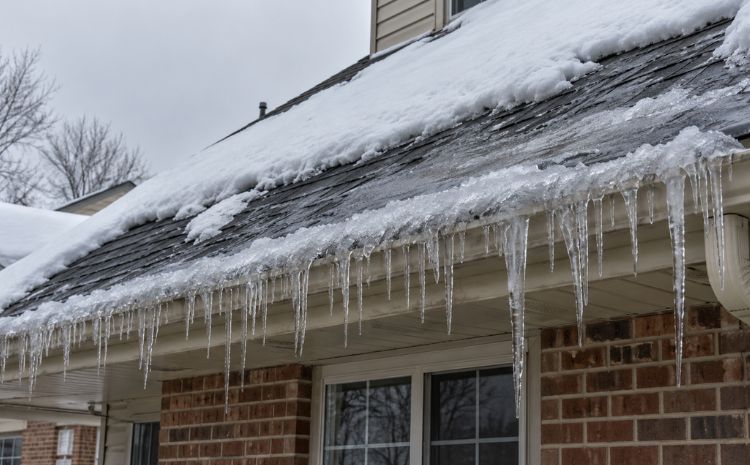
Ice dams form when attic heat melts snow on the upper roof, meltwater runs down to the cold eaves, refreezes, and builds a ridge of ice that ponds water behind it — water that then backs up under shingles. The damage happens at the eaves, but the cause lives in your attic: inadequate insulation and ventilation letting house heat warm the roof deck.
The fixes are fall projects: air-sealing attic bypasses, topping up insulation, and correcting ventilation — the same 1:150 ventilation math from our July attic post, working in reverse (in summer, ventilation exhausts heat; in winter, it keeps the deck cold and uniform). Clean gutters and clear valleys are the other half — a debris-loaded eave is an ice dam foundation.
If your house grows icicles like a postcard every winter, that's not charm — it's a heat-loss diagnostic, and September is when it's fixable.
When to Call for a Professional Inspection
The ground check is triage; some situations warrant the full professional version:
- Anything flagged in your ground check — you found the symptom; we diagnose the cause and extent
- A 10+ year old roof that's never had a professional inspection — baseline documentation matters for insurance (per last month's ACV discussion) and catches the aging pattern early
- After any significant wind or hail event this season — the invisible seal-strip damage from our August storm post applies straight through fall
- Before winter on any roof with a leak history — repaired leaks deserve verification that the repair holds
- If you're seeing interior signs — stains, damp attic insulation, mustiness — where the entry point is rarely directly above the stain, and finding it is genuinely diagnostic work
A professional fall inspection takes about an hour, includes photo documentation of everything found (valuable for insurance whether or not anything's wrong), and ends with an honest sort: what needs fixing now, what bears watching, and what's fine. Ours are free, and most of them conclude "you're fine — see you in spring."
Frequently Asked Questions
When's the ideal time for the fall inspection?
Late September through October — after the worst of storm season, before leaf-drop finishes loading your gutters, with comfortable repair-scheduling room before hard freezes. A second gutter clear after the leaves finish (mid-November) completes the winterization.
How often should a roof be professionally inspected?
Annually for roofs over 10 years old; after any major storm regardless of age; every 2-3 years for newer roofs. The fall slot is the highest-value one for the freeze-prevention reasons above.
Can repairs really still happen in late fall?
Comfortably into November most years — shingle repairs, flashing, and boots don't have the temperature constraints of full replacements (adhesive strips seal best above ~40-45°F, so late-season work uses hand-sealing techniques). This is precisely why September identification matters: everything schedules easily with two months of runway.
My roof is only 6 years old. Do I really need to check anything?
Do the 30-minute ground check — young roofs still take storm damage, and pipe boots and sealants age on their own schedule regardless of shingle warranty. Skip the professional inspection unless the ground check flags something or a major storm hit.
Is a drone inspection as good as someone on the roof?
Drones are a legitimate documentation tool and great for steep or fragile roofs — but hands-on inspection catches what cameras can't: seal-strip integrity (the press test from our storm posts), soft decking underfoot, and flashing that looks sealed but lifts to the touch. We use both; the drone supplements, the hands decide.
Thirty Minutes Now or an Emergency in January
Do the ground check this weekend — genuinely, it's a walk around your house with your eyes up. If anything looks off, or your roof is past ten years, or you'd just rather know for certain before the freeze cycle starts hunting: the professional version is free.
Covenant Contracting inspects and repairs roofs across the St. Louis metro — Fenton, Wildwood, Ballwin, Chesterfield, St. Peters, Grover, Valley Park, and surrounding areas. Free inspections, photo documentation included, honest verdicts.
Request Your Free Fall Roof Inspection →
Or call (314) 282-1991.