
Your Roof's Age Matters More Than You Think for Insurance
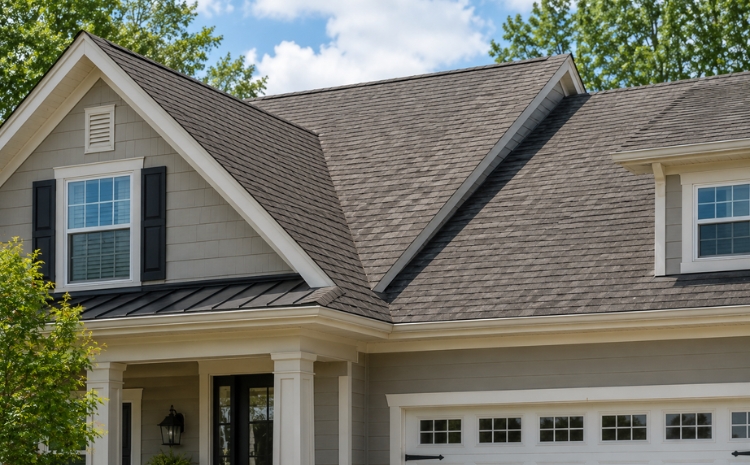
Here's a conversation that surprises St. Louis homeowners every year. They call their insurance agent about something routine and learn that their roof — the one that "still works fine" — has quietly changed how their entire policy behaves. Coverage that was full replacement is now depreciated. Or the renewal letter includes a roof inspection requirement. Or, in the sharpest cases, a non-renewal notice tied to roof age.
Your roof's age isn't just a maintenance fact. In 2026's insurance market, it's one of the most consequential numbers on your policy — and most homeowners don't know which side of the line they're on.
Here's how roof age actually interacts with insurance in Missouri, what changes at each age threshold, and the honest playbook for homeowners with roofs in the danger zone.
The Two Ways Policies Pay: RCV vs. ACV
Everything in this topic hangs on two acronyms:
RCV (Replacement Cost Value): the policy pays what it costs to replace your roof with a comparable new one, minus your deductible. A hailstorm totals your 17-year-old roof, and you get a new roof for the price of your deductible. This is the coverage most homeowners assume they have.
ACV (Actual Cash Value): the policy pays replacement cost minus depreciation for age and wear. That same 17-year-old roof, depreciated on a typical schedule, might be valued at 30-40% of replacement cost. On a $25,000 roof replacement with a $2,500 deductible, an ACV settlement might pay $7,000-$9,000 — leaving you $15,000+ out of pocket for the same storm, same damage, same house.
The difference between these two structures on an aging roof is often the largest insurance-coverage gap in a homeowner's entire financial picture, and it hides in policy language most people have never read.
What's Been Changing in the Insurance Market
Over the past several years, insurers operating in hail-prone states — Missouri very much included — have been systematically tightening roof coverage. The common moves:
Automatic ACV conversion at age thresholds. Many policies now convert roof coverage from RCV to ACV automatically when the roof passes a stated age — commonly 15 years for asphalt shingles, sometimes 10 on stricter policies. This often happens via endorsement at renewal, disclosed in the paperwork stack most homeowners don't read line by line.
Roof age caps for new policies. Shopping for new coverage with a 18-20+ year old roof increasingly triggers: mandatory inspections, ACV-only offers, exclusions, or declined applications.
Percentage-based wind/hail deductibles. Separate from age but compounding it: many Missouri policies have shifted from flat deductibles ($1,000-$2,500) to percentage deductibles (1-2% of dwelling coverage). On a $450,000 dwelling limit, a 2% wind/hail deductible is $9,000 — before any ACV depreciation is applied.
Inspection-driven renewals. Insurers increasingly use aerial imagery and drive-by inspections to assess roof condition, and renewal decisions follow. Homeowners have received non-renewal notices based on aerial photos showing roof wear they hadn't noticed themselves.
The direction of all of this is consistent: the insurance industry is transferring aging-roof risk back to homeowners, and the transfer accelerates at specific roof ages.
The Age Thresholds That Matter
Every carrier differs, but the pattern across the Missouri market:
Years 0-10: Full RCV coverage is standard. New-roof discounts often apply (more below). This is the quiet zone.
Years 10-15: The watch zone. Some stricter policies begin ACV conversion or inspection requirements here. Renewal paperwork deserves actual reading. Shopping your policy still easy.
Years 15-20: The action zone. ACV conversion is common at 15. Wind/hail percentage deductibles compound the gap. New-carrier shopping gets harder. A storm-damaged roof in this window with ACV coverage produces the five-figure out-of-pocket scenarios described above.
Years 20+: The exposure zone. Many carriers won't write new policies without replacement or won't renew. Coverage that remains is typically ACV with heavy depreciation. Practically speaking, a 20+ year old roof in Missouri is substantially self-insured whether the homeowner realizes it or not.
The critical action: find out today which structure your policy uses and at what age it changes. It's one phone call to your agent: "Is my roof covered at replacement cost or actual cash value, does that change at a specific age, and what is my wind/hail deductible?" Fifteen minutes, and you know exactly where you stand.
The Flip Side: What a New Roof Does for Your Policy
The same dynamics run in reverse, and this is the part that changes replacement math for homeowners with aging roofs:
New-roof premium discounts. Most carriers discount premiums meaningfully for roofs under 5-10 years old. Missouri homeowners commonly see reductions worth hundreds of dollars annually.
Class 4 impact-resistant shingle discounts. Missouri carriers offer additional discounts — frequently 5-25% off the wind/hail portion of premiums — for UL 2218 Class 4 rated shingles. On St. Louis-area premiums, this stacks into real money over a roof's life. The Class 4 upgrade at installation typically costs 10-20% more than standard architectural shingles and frequently pays for itself in premium savings alone over 7-12 years, before counting the actual hail resistance.
Restored RCV coverage. A new roof resets you to full replacement-cost coverage and restarts the age clock.
Insurability itself. For homeowners approaching non-renewal territory, a new roof is the difference between a competitive insurance market and a shrinking set of expensive options.
Run honestly, the math for a homeowner with an 18-year-old roof often looks like: continue paying rising premiums on coverage that would pay out a fraction of replacement cost anyway — or replace, capture the discounts, restore real coverage, and stop carrying the risk personally. The right answer is case-by-case, but most homeowners have never seen the two columns side by side.
The Playbook by Roof Age
If your roof is under 10: Verify your coverage structure once (the phone call above), keep your installation records and shingle documentation somewhere findable, and get storm inspections after major events. You're fine; stay documented.
If your roof is 10-15: Read your renewal documents each year specifically for roof endorsements. Ask the ACV question annually — policies change at renewal, not mid-term. Get a professional roof assessment so you know your roof's actual condition versus its paper age; well-maintained roofs can argue better positions with insurers, and documented condition matters if you ever contest an aerial-imagery decision.
If your roof is 15-20: This is the window where doing the math matters most. Get the coverage facts from your agent and a replacement quote from a contractor in the same month. Compare: current premium trajectory + ACV exposure + percentage deductible against replacement cost − new-roof discounts − Class 4 discounts − restored coverage. For many homeowners in this window, especially with any storm history in the area, replacement on your own schedule beats replacement on a storm's schedule by thousands of dollars.
If your roof is 20+: Have the replacement conversation now, before your carrier has it for you via non-renewal. A planned replacement lets you choose contractor, materials, and timing. A forced one after non-renewal happens on the market's terms — often with a gap-coverage scramble in between.
One Warning: Age Is Not a Claim
A boundary worth stating plainly, because storm-chaser season blurs it every year: an old roof is not an insurance claim. Storm damage is an insurance claim.
Insurance covers sudden events — hail, wind, falling limbs — not wear-out. A legitimate claim on an old roof requires legitimate, documentable storm damage from a dateable event, exactly as we covered in our July claims posts. The age dynamics above change what a claim pays and what replacement saves; they don't change what qualifies.
Anyone who suggests your roof's age itself is claimable, or that damage can be "found" on an old roof regardless of storms, is describing insurance fraud. Our storm chaser post covers how those stories end. An honest contractor will tell you clearly which situation you have: real storm damage worth claiming, or an aging roof worth replacing on your own terms. Both are solvable; only one involves your insurer.
Frequently Asked Questions
How do I find out if my coverage is RCV or ACV?
Call your agent and ask directly, or find the roof/windstorm endorsement pages in your policy documents. Ask three things: RCV or ACV on the roof specifically, whether it converts at an age threshold, and your exact wind/hail deductible structure. Get the answer in writing if anything sounds ambiguous.
My insurer says my roof is older than it is. How do I fix that?
Documentation wins: installation contracts, permits (municipalities keep records), manufacturer registration, even dated photos. If you bought the house without records, a permit search in your municipality often establishes the real installation date. A professional roof assessment documenting condition also helps contest imagery-based decisions.
Are Class 4 shingles worth it if my insurer's discount is small?
Usually still yes in this metro. Beyond the discount, Class 4 shingles genuinely resist the 1-1.5" hail that totals standard shingles — which means fewer claims, preserved claim-free discounts, and less deductible exposure over the roof's life. In a hail market like St. Louis, the resilience is the real product; the discount is a bonus.
Can my insurer really non-renew me just for roof age?
In Missouri, carriers can non-renew with proper notice for underwriting reasons, roof condition included. You'll receive advance written notice with time to shop or address the issue. If you believe a non-renewal is based on inaccurate information, you can contest it with documentation and escalate to the Missouri Department of Insurance if needed.
If I replace my roof proactively, do I really save money, or does it just feel safer?
It's case-by-case math, honestly. Inputs: your premium trajectory, your policy's ACV exposure, your deductible structure, local hail frequency, and how long you'll own the home. For 15+ year roofs in this metro, the math genuinely favors proactive replacement more often than homeowners expect — but we've also told homeowners with sound 14-year-old roofs and RCV coverage to wait. Bring us your policy facts and we'll run your actual numbers with you.
Know Where You Stand Before the Next Storm Decides for You
Two conversations tell you everything: fifteen minutes with your agent about your coverage structure, and a free roof assessment that tells you your roof's real condition and replacement number. Then the decision is yours, made with actual facts, on your schedule.
Covenant Contracting provides free roof assessments across the St. Louis metro — Fenton, Wildwood, Ballwin, Chesterfield, St. Peters, Grover, Valley Park, and surrounding areas. Honest condition reports, real replacement pricing, Class 4 options quoted alongside standard — and a straight answer about whether replacement now actually makes sense for you.
Request Your Free Roof Assessment →
Or call (314) 282-1991.