Ice Dams in St. Louis: What They Are and How October Prevents Them
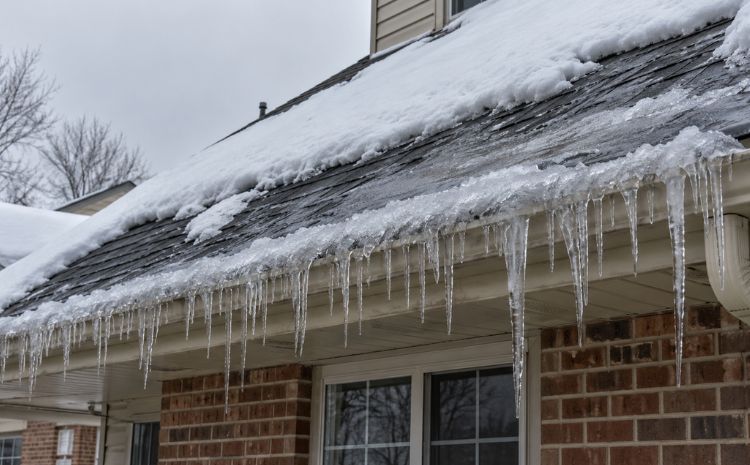
Every February, we get the same calls: water staining the ceiling below the roofline, drips at window tops, a ridge of ice sitting on the gutters like a glacier that missed its exit. And every February we deliver the same surprising news — the roof usually isn't broken. Ice dams are an attic problem wearing a roof costume, and the cure lives in October, not in February with a hammer.
Here's the honest physics, what the damage really costs, and the prevention work that's cheap, unglamorous, and dramatically effective — if it's done before the snow.
The Physics, in One Paragraph
Snow lands on your roof. Heat escaping from your house — through ceiling penetrations, attic hatches, recessed lights, and thin insulation — warms the roof deck and melts the snow from underneath. The meltwater runs down the roof until it crosses the cold overhang past your exterior walls, where there's no house heat below — and refreezes. Repeat for a week and the refrozen ridge becomes a dam; new meltwater pools behind it, backs up under the shingles, and finds your ceiling. Shingles shed water; they were never designed to sit in a pond.
Note what's absent from that story: roof failure. The shingles did their job. The house's escaping heat caused the flood.
What Ice Dam Damage Actually Costs
The February bill assembles fast: interior ceiling and wall repairs, insulation replacement where meltwater soaked it, gutter and fascia damage from the ice load, and — the quiet one — moisture in wall cavities that shows up months later as the problems covered in our moisture post. Insurers commonly cover sudden interior water damage, but the pattern from our roof-and-insurance breakdown applies here too: prevention-worthy conditions that were ignored make claims harder conversations. A serious ice dam winter can generate $5,000-$15,000+ in combined damage. The prevention below costs a fraction of one such winter.
The October Prevention Stack (In Order of Actual Impact)
1. Air-seal the attic floor — the biggest lever nobody sees. Every gap between your living space and the attic is a heat chimney: top plates, wire and pipe penetrations, the attic hatch, bath fan housings, recessed lights. Sealing them (foam, caulk, gaskets, covers) attacks the cause — the heat that melts the snow. The air-sealing and insulating the attic floor guidance from ENERGY STAR exists precisely because this cheap step outperforms expensive ones. Typical professional air-sealing runs $1,500-$3,500 and pays twice: fewer ice dams, lower heating bills. It's the heart of our attic post coming later this month.
2. Insulate to depth — evenly. Melt patterns follow thin spots: the bare strip over the bathroom, the compressed run where boxes lived for a decade. Bringing attic insulation to consistent, generous depth flattens the roof's temperature so snow melts evenly from the sun, not unevenly from below.
3. Ventilate the attic properly. Soffit-to-ridge airflow keeps the roof deck cold, which is exactly what you want — cold deck, no melt, no dam. Blocked soffit vents (usually buried by insulation without baffles) are the most common failure we find.
4. Fix the bath-fan crime. Bathroom exhaust fans venting into the attic — instead of through the roof or wall — pump warm moist air directly onto the deck. It causes ice dams and attic mold. This is a few-hundred-dollar correction that we flag on nearly every inspection where we find it.
5. Clean the gutters (helpful, but honestly ranked last). Clear gutters don't prevent ice dams — dams form on the roof edge, gutters or no gutters — but full gutters make everything worse and add ice weight that tears them off. Do it as part of the fall list from our gutter post; just know it's supporting cast, not the cure.
What about heat cables? Honest take: they're a symptom-management tool for problem spots (tricky valleys, low-slope sections, north-face shadows), not a substitute for fixing the heat leak. We install them where geometry earns them — after steps 1-3, not instead of them.
Why This Is an October Post
Air sealing and insulation work needs a safe, dry, non-frozen attic — and contractor calendars that haven't hit winter-emergency season. The winter weather research on freezing-related home losses tells the same story every year: the houses that spend February happy did their boring work in October. Add a professional roof-edge check while you're at it — ice-and-water membrane at the eaves (standard on quality re-roofs, per the practices in professional roofing resources) is the backstop layer for whatever melt still happens.
Frequently Asked Questions
What causes ice dams?
Heat escaping your house melts roof snow from below; the meltwater refreezes over the cold eaves, builds a dam, and pools water back up under the shingles. The cause is attic heat loss and uneven roof temperature — not shingle failure.
How do I prevent ice dams?
In impact order: air-seal the attic floor, bring insulation to even depth, ensure real soffit-to-ridge ventilation, get bath fans venting outside, and keep gutters clear. October is the working window — all of it is miserable or impossible in January.
Do ice dams mean I need a new roof?
Usually no. If shingles were damaged by ice or chronic dams, repairs may be needed — and any re-roof should include eave ice-and-water membrane — but replacing a roof without fixing the attic heat leak buys you a new roof with the same ice dams.
Should I knock ice dams off my roof?
Please don't — hammers and shovels on ice take shingles with them, and roof-edge ice work from a ladder is genuinely dangerous. If a dam is actively leaking, professional steam removal is the safe interim fix while the real cure waits for spring attic work.
Book the Boring Work
An attic assessment takes under an hour: we'll show you the heat leaks, the thin insulation, where the bath fan really goes, and give you the exact October fix list with honest pricing. February-you will be very grateful.
Covenant Contracting handles roofing and attic winterization across the St. Louis metro — Fenton, Wildwood, Ballwin, Chesterfield, St. Peters, Grover, Valley Park, and surrounding areas.
Request Your Free Attic & Roof-Edge Assessment →
Or call (314) 282-1991.