Basement Moisture Problems: Fix These BEFORE You Finish the Space
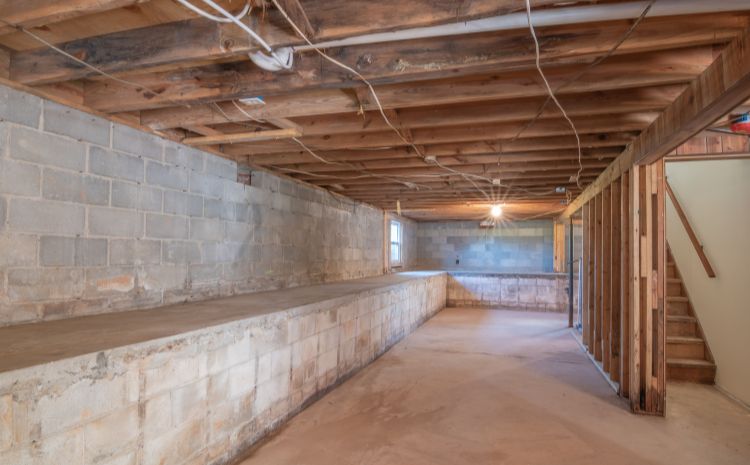
This is the most important post in our fall basement series, and it's the one that occasionally costs us a sale — which is exactly why you should read it.
Here's the scenario we walk into several times a year: a family, excited to finish their basement, budget ready, Pinterest board loaded. And on the walkthrough, we find it — the efflorescence bloom on the north wall, the faint tide line at the slab edge, the musty note near the corner. When we say "this gets fixed before we finish anything," some families thank us. Some call another contractor who'll skip the conversation.
Two or three years later, some of that second group calls us back — this time about mold behind drywall, buckled flooring, and a finished basement that has to be partially demolished to fix the problem that was visible, diagnosable, and fixable before the first stud went up.
Finishing a basement over a moisture problem means paying for the same basement twice. Here's how to know if you have one, what the fixes actually are (most are cheaper than you fear), and why "it only happened once" is the sentence that should slow you down, not reassure you.
Why Moisture Is THE Prerequisite
An unfinished basement is honest: water shows itself on bare concrete, evaporates freely, and does limited damage. A finished basement is the opposite — framing, insulation, drywall, and flooring hide the wall completely and give moisture what it never had before: organic material to feed on and darkness to work in.
The same minor seep that left a harmless white stain on bare concrete becomes, behind a finished wall: saturated insulation, mold colonization on drywall paper (mold's favorite food), rotting bottom plates, and cupped flooring — usually discovered by smell, months after it started. Remediation means demolition of the finished work, the moisture fix that should have happened first, and rebuilding. We've seen families pay $15,000-$40,000 for that sequence on basements that needed a $2,000-$8,000 fix before finishing.
That's the entire argument. Every reputable basement contractor's process starts with moisture assessment — and any contractor who walks your basement, sees warning signs, and doesn't bring it up is telling you something important about how they work.
The Warning Signs: Your Basement Is Already Talking
Before any professional assessment, your basement self-reports. The signs, from subtle to shouting:
Efflorescence — the white, chalky, crystalline bloom on concrete walls. This is dissolved minerals left behind by water that moved through the wall and evaporated. It's not mold and not itself harmful — it's a map of water movement. Small historic patches: noted. Active, spreading, or widespread: diagnostic.
Tide lines and staining at the slab-wall joint or up the wall — the high-water marks of past events.
Musty odor, especially seasonal (spring rains, summer humidity). Smell is often the earliest detector — you're smelling microbial activity somewhere moisture persists.
Rust on furnace feet, water heater base, column bases, stored metal — evidence of either past water on the slab or chronic high humidity.
Damp patches that come and go with rain — pattern matters enormously for diagnosis (below).
Cracks in walls or slab — most are benign shrinkage cracks; horizontal cracks or cracks with displacement are structural conversations; any crack with staining is a water pathway.
Condensation on cold surfaces in summer — pipes, walls below grade. This one has a completely different cause and fix than seepage, which is why diagnosis precedes solutions.
"It only flooded once, during that huge storm." The most dangerous sentence in basement finishing. Once means the pathway exists. The next once happens after the drywall's up.
Diagnosis: The Three Different Problems That Look Alike
Wet basements have three distinct causes, and the fix depends entirely on which one (or which combination) you have. This is where DIY solutions go wrong — they treat symptoms interchangeably.
1. Surface water management failure (the most common and cheapest). Rain and roof water is being delivered to your foundation: clogged or undersized gutters, downspouts dumping at the wall, grading that slopes toward the house, window wells without drainage. Water appears after rains, often at predictable spots. This cause is behind the majority of St. Louis wet basements, and the fixes are the cheapest in the entire field. (Our gutter post later this month expands the exterior half of this story.)
2. Hydrostatic pressure and groundwater (the structural version). Water table rises with saturation and pushes water through the slab-wall joint, floor cracks, or wall cracks. Appears during extended wet periods, sometimes without a specific storm, often at the cove joint. This is the category that warrants interior drainage systems.
3. Humidity and condensation (the imposter). No water enters at all — humid summer air condenses on cool below-grade surfaces. Damp feel, musty smell, condensation on pipes and walls, worst in July-August. Waterproofing does nothing for this; the fix is dehumidification and ventilation design, and it's the cheapest of all.
A proper assessment sorts your basement into these categories with moisture meters, pattern history (when, where, how much, correlated with what weather), exterior inspection of grading and drainage, and sometimes a hose test. Diagnosis first — always.
The Fixes, Honestly Priced (2026 St. Louis)
From least to most invasive — and note how much lives at the affordable end:
Gutter, downspout, and grading corrections: $500 – $4,000. Downspout extensions discharging 6-10 feet from the foundation, gutter capacity fixes, regrading soil to slope away (6 inches of fall in the first 10 feet is the target), window well drains. This tier resolves a remarkable share of "wet basements" entirely. Any contractor proposing interior systems without first addressing surface water is selling you the expensive fix before the correct one.
Crack injection (poured walls): $400 – $1,200 per crack. Epoxy or polyurethane injection permanently seals typical shrinkage cracks. Straightforward, proven, done from inside.
Dehumidification design: $1,500 – $3,500. For category-3 basements and as insurance in every finished basement: a quality ducted or standalone dehumidifier with condensate management, sized for the space. We include humidity management in essentially every basement we finish — St. Louis summers demand it.
Interior drainage system + sump: $4,000 – $12,000. The real fix for genuine hydrostatic pressure: perimeter drain channel at the slab edge (installed by opening a strip of slab), collecting to a sump basin with pump and battery backup. Done before finishing, it integrates invisibly and permanently. This is the system the "waterproofing companies" sell — legitimately the right answer for category 2, and overkill for category 1, which is why diagnosis matters.
Exterior excavation waterproofing: $15,000 – $40,000+. Excavating to the footing, membrane and drain board on the exterior wall, new footing drains. The gold standard for severe wall seepage — and rarely necessary for typical finishing projects. If someone leads with this, get a second opinion.
Sump battery backup: $800 – $2,000. Whatever else is true: if your finished basement depends on a sump pump, it gets a battery backup. Power fails during exactly the storms that fill sumps. Non-negotiable in our builds.
How This Integrates Into a Finishing Project
The right sequence, which adds only 1-3 weeks to the timeline from our cost breakdown:
Walkthrough includes moisture assessment (every one of ours does) → diagnosis and fix scope if anything's found → moisture work happens first — often during the permit window, costing zero calendar time → verification through at least one significant rain where the situation warrants → then finishing proceeds, with moisture-smart construction regardless: inorganic insulation choices against foundation walls, the proper air gap, moisture-tolerant flooring (the LVP default from our cost post exists for this reason), and humidity management built in.
And if your basement is bone-dry with no history? The assessment takes twenty minutes, confirms it, and you build with confidence. That's most basements, honestly — this post isn't about scaring anyone; it's about the minority of cases where skipping this step converts a good investment into a demolition project.
Frequently Asked Questions
Our basement flooded once in a historic storm five years ago, and never since. Do we really need to do anything?
Diagnosis, at minimum. One flood means a pathway exists and a threshold was found. The answer might genuinely be "downspout extensions and a verified grade — $1,500 and done." But finishing without knowing converts an open question into a hidden one. "Never since" is weather history, not a warranty.
Can't we just use waterproof materials everywhere and skip the fix?
Moisture-tolerant materials (LVP, inorganic insulation, PVC trim) are damage mitigation — they're why modern finishes survive small events better. They don't stop mold in wall cavities or water under flooring. Materials are the seatbelt; the moisture fix is the brakes. You want both.
Do we need a "waterproofing company" or can our finishing contractor handle it?
Depends on category. Surface-water fixes, crack injection, and humidity design are within a quality remodeling contractor's scope (ours included). Full interior drainage systems involve specialty subcontractors we bring in and coordinate. The advantage of your finishing contractor leading: the diagnosis isn't performed by someone whose only product is the $10,000 system.
Will a moisture fix raise our project cost beyond budget?
Usually the opposite of what people fear: the majority of fixes land in the $500-$4,000 surface-water tier, inside the contingency line from our cost breakdown. The $8,000+ scenarios are the minority — and they're precisely the basements where skipping the fix would have been catastrophic. Either way, you want to know before the drywall's ordered.
How do we know a proposed fix actually worked before finishing over it?
Fair and important: verification through real weather. For meaningful fixes we build a verification window into the schedule — the basement stays observable through at least one significant rain event, with moisture readings before and after. Trust, then verify, then finish.
The Twenty Minutes That Protects the Whole Investment
Every basement walkthrough we do starts with the moisture assessment — before layouts, before finishes, before any of the fun. If there's a problem, you'll hear it straight, with the honest fix and the honest price. If there isn't, you build knowing.
Covenant Contracting finishes basements — properly, in the right order — across the St. Louis metro: Fenton, Wildwood, Ballwin, Chesterfield, St. Peters, Grover, Valley Park, and surrounding areas. Free walkthrough consultations, moisture assessment included.
Request Your Free Basement Assessment →
Or call (314) 282-1991.