Guest-Ready in Four Weeks: Converting a Bonus Room Before Holiday Company
Somewhere upstairs — usually over the garage — there's a room that never got a job. It has drywall, a closet, maybe carpet from two owners ago, and a current occupancy of exercise equipment, holiday bins, and regret. Meanwhile, Thanksgiving is four-ish weeks out, Christmas right behind it, and the air mattress in the office is about to be presented to your in-laws as "the guest room."
The bonus room conversion is the most achievable meaningful project left on the pre-holiday calendar — real scope, honest budget, four-week timeline. Here's exactly what it involves, including the one fix that matters more than all the pretty parts combined.
First, the Comfort Truth About Rooms Over Garages
Ask anyone who's slept in an unimproved bonus room in January: it's the coldest room in the house. That's not bad luck — it's geometry. The room has attic above, exterior walls on multiple sides, and an unheated garage below, meaning it's wrapped in cold on five of six surfaces. Builder-grade insulation in those floors and kneewalls, plus leaky kneewall doors and can lights, and the room runs 5-10 degrees off the rest of the house year-round.
So the honest conversion starts invisible: sealing and insulating the boundaries — floor over the garage, kneewalls, slopes, the attic hatch behaviors covered in our attic post next week. It's the least photogenic line in the budget and the difference between "guest room" and "guest room with a space heater and an apology." Comfort scope typically runs $1,500-$4,000 within the project, and skipping it is how bonus rooms end up reconverted to storage by March.
The Four-Week Conversion, Week by Week
Week 1 — Comfort and infrastructure. Insulation and air sealing per above; electrical touch-ups (bedside outlets where beds actually go, a switched light that isn't a pull chain); any drywall repairs from the room's storage era.
Week 2 — Surfaces. Paint, using the whole playbook from our painting guide — and in a pre-1978 home, the same lead-safe renovation rules apply up here as anywhere. Trim refresh, closet interior rebuilt from "bin cave" to hanging-plus-shelves.
Week 3 — Floor. New carpet (the right call over garages — warm underfoot, quiet overhead) or LVP with a serious pad. Flooring after paint, always.
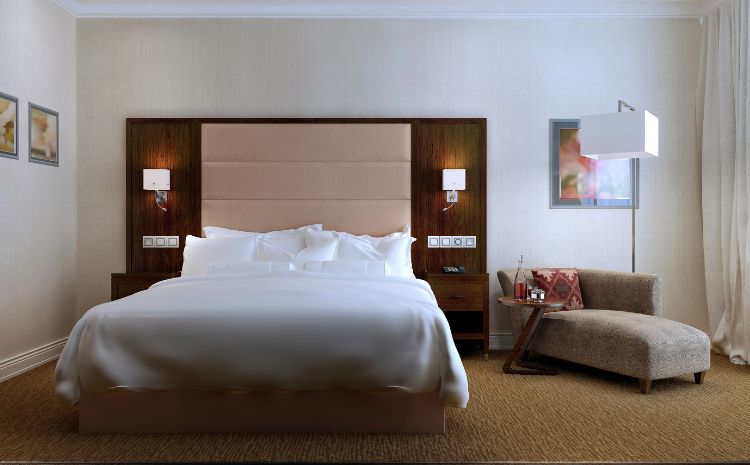
Week 4 — The room becomes a room. Window treatments that actually block light, lighting layers (overhead on a dimmer + lamps), furniture in, dormer nook claimed for a chair. Guests arrive to a room that looks like it was always meant for them.
Total for the conversion scope: $6,000 – $15,000 depending on room size, insulation needs, and flooring tier — a new range for the corpus (flagged), sitting deliberately between a refresh and a remodel because that's what it is. What moves it: bathroom proximity work (see below), window replacement if the room's units are failed, and closet ambition.
Worth Deciding Now: The Three Upgrade Forks
The bathroom question. A bonus room with a nearby full bath is a guest suite; without one, guests commute. If a bath adjoins or nearly adjoins, the one-week refresh scope from our guest bathroom timeline slots into the same four weeks. Adding a new bath is remodel-tier scope and a spring conversation — worth designing now if the room's future is teenage or in-law.
The legal-bedroom question. For the room to list and appraise as a bedroom, it needs what bedrooms need — including a code-compliant escape opening. Most bonus rooms have real windows and pass easily, but low sills, small openings, and odd dormers deserve a check; the same egress logic from our basement egress guide governs upstairs sleeping rooms too.
The forever-function question. Guest room now — then what? Rooms convert best when wired for their second life: office (add circuits/data now), teen bedroom (closet investment now), hobby room (lighting now). Two hours of design thinking prevents the re-renovation.
Why This Beats the Alternatives, Honestly
Against the cost-versus-value benchmarks universe, the bonus room conversion is quiet arbitrage: you're not building space — the $300-$450/sq ft addition problem — you're activating space the mortgage already pays for, at refresh-tier money. A functioning additional bedroom changes how the house lives and how it lists. The only losing move is the one most bonus rooms get: another year of storage.
Frequently Asked Questions
How much does it cost to convert a bonus room to a bedroom?
St. Louis: typically $6,000-$15,000 for the full conversion — comfort insulation/air-sealing, electrical touches, paint, flooring, closet, lighting. Adjacent-bath refreshes add per their own scope; new bathrooms are a separate, larger project.
Why is the room over the garage so cold?
Cold on five sides — attic above, exterior walls around, unheated garage below — plus typically thin builder insulation and air leaks at kneewalls and lights. Air sealing and proper insulation fix it; a bigger vent or a space heater just argue with physics.
Does converting a bonus room add value?
Activated, comfortable, bedroom-legal space shows and appraises far better than "storage room with potential." You're improving function at refresh pricing rather than buying square footage at addition pricing — the value math leans friendly.
Can it really be done before Thanksgiving?
Booked this week: yes for the core scope — it's a four-week project by design. Booked in November: it's a before-Christmas project, which is still a very good outcome.
Give the Room a Job
Send us two photos of your bonus room and its measurements — we'll map the four weeks, price the scope honestly, and get your in-laws off the air mattress this year.
Covenant Contracting handles conversions and remodeling across the St. Louis metro — Fenton, Wildwood, Ballwin, Chesterfield, St. Peters, Grover, Valley Park, and surrounding areas.
Request Your Free Conversion Consultation →
Or call (314) 282-1991.