The Guest Bathroom Refresh: Ready for Holiday Visitors in 6 Weeks
Back in August, our master bath post made the honest case that a full bathroom remodel wanted a mid-August start to beat the holidays — and that if you missed the window, there was a smaller play worth knowing about. This is that play.
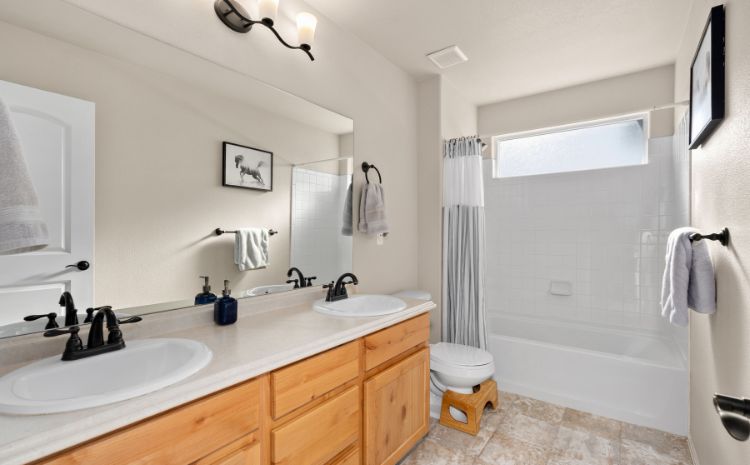
Here's the thing about holiday hosting: your guests never see your master bathroom. They live in the hall bath. That's the bathroom your mother-in-law evaluates, the one the Thanksgiving crowd cycles through, the one with the 1990s brass fixtures and the grout you've stopped seeing but visitors haven't.
And unlike the master remodel, the guest bath refresh fits inside the remaining calendar: 4-6 weeks, $8,000-$18,000 for the sweet-spot scope, done before Thanksgiving if the conversation happens by mid-October. Here's the honest scope map — what a refresh includes, where it stops, and the line where refresh becomes remodel.
Refresh vs. Remodel: The Line That Matters
The reason a refresh fits in six weeks when a remodel takes sixteen is what it doesn't touch:
A refresh keeps: the layout, the tub (per the one-tub rule from our shower-vs-tub post — the hall bath is exactly where that tub lives), the plumbing locations, and usually the tile floor plan.
A refresh replaces: the vanity and top, faucet and fixtures, mirror and lighting, toilet (often), flooring (the LVP-over or replace decision below), paint, hardware, and — the transformer — the tub surround.
No plumbing relocation means no major permits or rough-in inspections; no layout change means no design weeks; stock and quick-ship materials mean no 10-week cabinet lead. That's the entire timeline trick: the refresh is a materials-and-craft project, not an engineering one.
The Scope Menu, Priced Honestly (2026 St. Louis)
Tier 1 — The Weekend-Feel Refresh: $3,500 – $7,000 (2-3 weeks). Vanity swap (quality stock vanity with top), faucet, mirror, lighting, toilet, paint, hardware, accessories. The bathroom reads new; the tub surround and floor stay. Right answer when the tile is genuinely fine and the dated pieces are the fixtures.
Tier 2 — The Full Refresh: $8,000 – $18,000 (4-6 weeks). The sweet spot, and the version this post is really about. Everything in Tier 1, plus: new tub surround (tiled, in classic patterns that install efficiently — subway and its relatives), new flooring (LVP or tile), a proper vent fan upgrade (the silent workhorse nobody thinks about until the mirror fogs permanently), and glass or a quality rod/curtain setup. This tier makes the bathroom actually new everywhere a guest looks, while staying inside the no-relocation rules.
Tier 3 — The Refresh-Plus: $18,000 – $28,000 (6-9 weeks). Tier 2 plus scope that starts bending the rules: a tub-to-shower conversion (only if another tub exists in the house — the one-tub rule governs), semi-custom vanity, tile flooring with heated mat, pocket door swap. This tier can still land before the holidays from an early October start, but the buffer thins — honest expectations required.
Where refresh must become remodel (different conversation, spring timeline): moving any plumbing, expanding the footprint, structural or subfloor rebuilds discovered underway, full waterproofing rebuilds. If your hall bath's problems live at this level, the honest answer is the full-remodel path from the August post — booked now for a January-spring slot (per the same winter-booking logic as this month's kitchen post).
The Six-Week Calendar, Worked Backward from Thanksgiving
Thanksgiving 2026 is November 26. The Tier 2 math:
Week of Oct 12 (the real deadline): consultation and decisions. One visit, scope set, selections made from stock and quick-ship lines — this is the discipline that keeps the timeline honest. The refresh's material list is deliberately built from what's available in days, not months: stock vanities, in-stock tile, standard fixtures.
Weeks of Oct 19-26: materials land, project scheduled.
Weeks of Nov 2-16: construction — 2-3 weeks of actual work. Demo (2 days), surround tile and floor (week one-plus), vanity/toilet/fixtures/paint (week two), punch and caulk cure (final days).
Week of Nov 16: done, with a buffer week before the guests land.
Start a week later and the buffer's gone; start November 1 and you're hanging a mirror while the turkey thaws. Per every timeline post we've written: the front-end decisions, not the construction, are where these calendars die. Come with choices made — or make them in the consultation — and six weeks is comfortable.
Where the Money Goes Furthest (Guest-Bath Edition)
The guest bath has its own value physics — it's a low-use, high-visibility room, which inverts some master-bath logic:
Spend on what guests see and touch: the vanity area (vanity, top, faucet, mirror, sconces) is 80% of the visual impression — this is where mid-tier beats builder-grade visibly. Fresh caulk and grout everywhere; nothing reads "tired" like stained caulk lines. Good lighting — swap the strip light for sconces or a quality fixture, and the whole room's photo changes. A comfort-height elongated toilet (guests notice; $350-$600 installed difference).
Save without guilt: premium tile exotica (classic subway at $8-12/sq ft installed photographs identically to $40 zellige in a hall bath), the faucet tier above "solid mid-range" (the August kitchen post's faucet truth applies squarely), heated floors (a master-bath luxury; guests visit in socks for ten minutes), and custom glass (a quality curtain-and-rod or stock glass panel serves a tub-shower fine).
Don't skip (the invisible two): the vent fan upgrade ($350-$700 — moisture management is what keeps your new paint and caulk new) and honest subfloor inspection during demo (soft spots found on day two get fixed for hundreds; found next year, thousands — the small contingency below covers it).
Contingency: 10%. Hall baths in older St. Louis homes hide the same surprises as their master siblings — usually at the tub drain or toilet flange. $800-$1,500 held back turns discoveries into line items instead of crises.
Why This Project Punches Above Its Weight
For $8,000-$18,000 — kitchen-backsplash money in the remodeling universe — the guest bath refresh delivers three returns at once:
The hosting return, immediately: every holiday guest for years experiences the new version. No other sub-$20K project has this visibility-per-dollar.
The daily return: "guest" bath is a polite fiction in most family homes — it's the kids' bath, the morning-rush overflow, the main-floor powder stop. The refresh upgrades every day, not just holidays.
The resale return: updated baths are top-tier listing photography, and the hall bath — with its one-tub-rule tub intact — is exactly what family buyers check (per the shower-vs-tub post's buyer math). Refresh-tier spending on secondary baths recovers unusually well because the outlay is modest.
Frequently Asked Questions
Can this really be done in one bathroom while we use it? We only have the two.
The hall bath refresh assumes your household migrates to the master for 2-3 weeks — the reverse of the master-remodel arrangement. One-bathroom homes are a different, carefully-sequenced project (typically keeping the toilet functional nightly); tell us upfront and we plan accordingly. It's done regularly; it just requires honesty about the plan.
Reglazing the tub instead of tiling a new surround — legitimate shortcut?
Sometimes, honestly: a professional reglaze ($500-$900) on a sound cast-iron tub buys 5-10 years of fresh white and fits Tier 1 budgets. The full acrylic panel-over systems get the same caution as in the shower-vs-tub post — fine at rental grade, visible at mid-market. If the surround tile is failing (not just dated), tile it properly; that's the Tier 2 line.
Our hall bath is tiny — does a refresh even matter at 5x8?
5x8 is the classic hall bath, and it's exactly where refreshes shine — small rooms mean small material quantities, which means the budget buys better everything. The August small-bathroom post's space tricks (right-sized vanity, large mirror, lighting layers, glass instead of curtain where it fits) all apply; several are Tier 1-2 moves.
Should we do the guest bath now and the master this spring?
That's the sequence we'd recommend more often than the reverse: the guest bath catches the holidays; the master books the winter design season and lands in spring (per this month's kitchen-booking logic — same winter advantage applies to baths). Bundling both into one plan also sequences trades efficiently; ask about it in the consultation.
Is mid-October truly the deadline, or is that urgency theater?
It's arithmetic with a modest buffer, same as every deadline post we've published: 1-2 weeks materials + 2-3 weeks construction + buffer = the week of October 12 for Thanksgiving certainty. Start October 25 and you're probably still fine — with zero margin for the subfloor surprise. Start November 5 and we're honestly talking about a beautiful bathroom for Christmas instead. The calendar's the calendar.
The Bathroom Your Guests Actually See
Six weeks, one focused scope, and the room every holiday visitor experiences gets a decade younger. The conversation that makes it happen by Thanksgiving is an early-October one.
Covenant Contracting refreshes and remodels bathrooms across the St. Louis metro — Fenton, Wildwood, Ballwin, Chesterfield, St. Peters, Grover, Valley Park, and surrounding areas. Free consultations, honest tier guidance, stock-smart selections that keep timelines real.
Request Your Free Bathroom Consultation →
Or call (314) 282-1991.