Interior Painting Before the Holidays: Cost, Timeline, and the Right Sequence
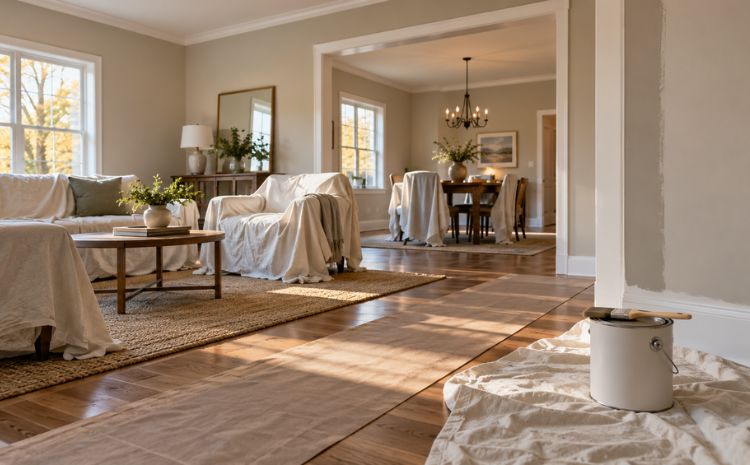
Of everything on our Thanksgiving countdown's green-light list, interior paint is the champion: the biggest visual change per dollar, per day, and per unit of household chaos — and in mid-October, it's still fully on the table. A main floor can be transformed in under a week, dry, aired out, and hosting-ready with weeks to spare.
But "get some painting done" hides real decisions: what professional work actually costs here, why the sequence matters more than the color, and the older-home rule that separates a proper job from a hazardous one.
Real St. Louis Pricing
Consistent with the countdown post's numbers — interior paint runs 1-2 weeks and $2,500-$8,000 for main living areas, and here's the finer grain:
Per room (walls only, standard height): roughly $400-$900 per bedroom-sized room; great rooms and open plans more. Add trim, doors, and ceilings and a room roughly doubles — trim work is slow, skilled, and where quality visibly lives. Whole main floor (open living/dining/kitchen walls + trim + hall): the $4,000-$8,000 zone. Whole house interiors commonly run $8,000-$18,000 depending on square footage, ceiling heights, trim package, and how many colors the plan carries.
What moves the number: wall condition (patching and skim work is labor), ceiling height (two-story foyers are scaffold territory), color changes (dark-to-light means extra coats), and trim scope. What shouldn't move it: quality paint — the difference between builder-grade and premium paint is a few hundred dollars across a whole floor and years of difference in washability and touch-up behavior. It's the last place to economize.
The Sequence Professionals Use (And Homeowners Skip)
Ceilings → walls → trim. Gravity and cut-lines both agree. Reversing it means re-cutting edges twice.
Repairs before paint, honestly scoped. Nail pops, settling cracks, water stains (stain-block primer or they will ghost through), and the drywall shiners every house accumulates. A quality bid includes a prep line; a suspiciously cheap one skipped it, and prep is the whole difference at year three.
Moisture rooms get moisture logic. Bathrooms and kitchens want bath/kitchen-rated finishes — and if a bathroom's paint is peeling or mildewing, paint is the symptom: the room needs moisture control and a properly sized exhaust fan actually vented outside, or the new paint inherits the old paint's fate. We check the fan before we quote the paint.
Ventilation and cure time in the plan. Modern low-VOC paints are dramatically better to live with, but fresh paint still wants airflow and a few days of gentle treatment before furniture slides back and garland gets taped up. Build the buffer into the holiday math.
The Pre-1978 Rule (Non-Negotiable)
A large share of the housing stock in our metro predates 1978 — and in those homes, sanding, scraping, or disturbing old paint layers can release lead dust. Professional work in pre-1978 homes follows lead-safe certified practices: containment, HEPA cleanup, proper disposal. This is exactly the containment discipline from our living-through-renovation guide, and it's the sharpest difference between a certified crew and a cash-only crew with drop cloths. If your home is pre-1978, ask the question directly; the right contractor answers it before you ask.
Paint as Strategy, Not Just Color
Three moves worth stealing from how designers deploy paint:
Paint the connected sightline as one system. Open plans read as one space — the countdown post's advice stands: choose the palette for the view, not room by room. Three-ish coordinated colors beats seven adventurous ones.
Spend where eyes and hands land. Fresh trim and doors read as "maintained house" louder than fresh walls do. If budget forces a choice for the holidays: walls in the hosting core, trim where it's chipped, and the front door — the $300 refresh that greets every guest.
Sequence around the other projects. Paint goes after drywall or trim work, before new flooring when possible, and last in any refresh — which is why it's the final step of the kitchen refresh scope, not the first.
The Honest Calendar From Today
Booked this week: main-floor projects complete by early-to-mid November comfortably. Whole-house projects: still achievable before Thanksgiving, but the window is closing — painter calendars stack up hard from Halloween through the holidays, and December brings the "before Christmas?" panic pricing. Same lesson as every seasonal post we write: the calm booking beats the frantic one, in both quality and money.
Frequently Asked Questions
How much does interior painting cost?
St. Louis 2026: roughly $400-$900 per standard room (walls), doubling with trim/ceilings; $4,000-$8,000 for a typical main floor; $8,000-$18,000 for whole-house interiors. Prep needs, ceiling height, and trim scope drive the spread.
How long does interior painting take?
A main floor: typically 3-6 working days including prep and dry time between coats. Whole house: 1-2 weeks. Add a few days of cure-and-air before heavy furniture and holiday decorating.
Is professional painting worth it over DIY?
For a powder room, DIY away. For main floors, trim packages, tall spaces, and pre-1978 homes, the pros earn it in prep quality, cut lines, speed, and lead-safe practice — and holiday-deadline projects are the worst possible DIY learning lab.
Can painting be done before Thanksgiving?
Booked by mid-to-late October: yes for main-floor scope, with schedule to spare. It's the single best remaining project on the pre-holiday board.
Get on the Calendar
Tell us the rooms and send a few photos — we'll give you a real number, a real schedule, and if your house is pre-1978, the lead-safe plan that comes standard with doing this right.
Covenant Contracting handles interior painting and finish work across the St. Louis metro — Fenton, Wildwood, Ballwin, Chesterfield, St. Peters, Grover, Valley Park, and surrounding areas.
Request Your Free Painting Quote →
Or call (314) 282-1991.