Why Your Energy Bills Spike in July (And When Your Siding Is the Reason)
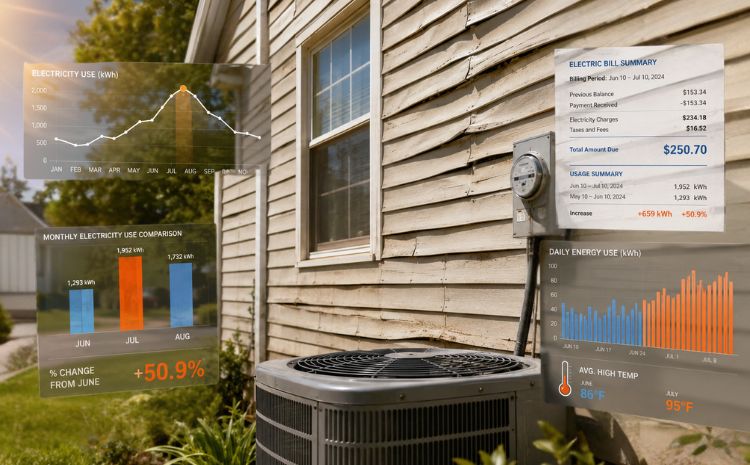
If you’ve opened your July electric bill and felt a small heart attack, you’re not alone. Energy costs in the St. Louis metro have climbed significantly over the last few years, and the homeowners who feel it most are the ones whose homes weren’t built to handle modern energy costs.
Most homeowners blame the HVAC system. Sometimes that’s right. Sometimes it’s the thermostat or the windows. But there’s a common culprit that almost nobody thinks of, and it’s hiding in plain sight on the outside of your house.
Your siding might be why your bills are this high.
How Siding Actually Affects Energy Bills
Most people think of siding as a cosmetic element — what your house looks like from the street. It’s actually a critical part of your home’s thermal envelope, and when it’s not doing its job, your HVAC system is paying the price.
Here’s what’s happening when siding fails to perform:
Heat transfers through poorly insulated wall systems. On a 95°F day, the sun is heating your home’s exterior walls aggressively. If your siding system doesn’t include adequate insulation or thermal breaks, that heat transfers right through into your living space. Your AC then has to remove it.
Air infiltration through siding gaps. When siding is old, warped, or improperly installed, there are gaps. Sometimes you can see them; usually you can’t. Hot, humid summer air leaks into your wall cavities, pulls heat into the home, and adds moisture that makes everything harder to cool.
Solar absorption on dark surfaces. Older vinyl siding in dark colors or faded paint on wood siding absorbs more solar radiation than modern reflective materials. The exterior surface temperature can be 20–30°F warmer than it should be, transferring heat through walls all afternoon.
Failing house wrap behind the siding. This one’s invisible from outside. Older homes often have torn, deteriorated, or missing house wrap behind the siding — which means moisture and air infiltration are happening constantly without any of the modern barriers that should be there.
Compromised insulation. When water or air infiltration has been happening for years through failing siding, the insulation behind it often gets damaged. Wet insulation has dramatically reduced R-value. Compressed insulation is less effective. Pest-damaged insulation is barely functional.
The net effect: your HVAC system is fighting an uphill battle against a wall system that’s leaking energy in every direction.
Signs Your Siding Is Costing You Money
How do you know whether siding is part of your energy bill problem? A few telltale signs:
- Hot spots in specific rooms. If one or two rooms on the south or west side of your home are dramatically warmer than the rest of the house even with AC running hard, the wall system is failing in those areas.
- Drafts near walls and outlets. Walk around your home on a hot day and feel near electrical outlets, light switches, and seams along exterior walls. If you feel warm air seepage, hot air is infiltrating through the wall system.
- Visible siding damage. Cracks, warping, gaps at corners or seams, faded paint, peeling, or any visible deterioration. If you can see issues from the outside, the wall system underneath is almost certainly compromised.
- Mold or moisture stains inside. Especially in upper corners of rooms or along exterior walls — these can indicate water infiltration through failing siding.
- Insulation visible in soffits or wall openings. When insulation has slumped, settled, or been damaged, you can sometimes see it through soffit vents or when light fixtures are removed.
- Steadily climbing summer bills. If your July bill in 2025 was significantly higher than 2022 or 2023 with similar weather and usage, your home’s efficiency has degraded over time.
- Old siding. If your siding is more than 25–30 years old, even if it looks okay, it’s probably not performing the way modern siding does. Materials and installation methods have improved significantly in the last two decades.
What Modern Siding Does Differently
If your home was built before 1990 (and especially before 1980), the siding and insulation system likely isn’t close to modern standards. Here’s what’s changed:
Insulated siding. Modern vinyl and fiber cement options often come with integrated rigid foam backing that adds R-value directly to the siding installation. This is a meaningful efficiency upgrade compared to non-insulated siding installed over standard sheathing.
Modern house wrap and air barriers. Today’s house wrap (Tyvek, Typar, ZIP system, others) creates an actual air barrier that prevents the infiltration that older felt paper or no wrap allowed. This is one of the biggest invisible efficiency improvements possible.
Continuous insulation. Best-practice modern installations include rigid foam insulation between the sheathing and the siding, creating a thermal break that older homes simply didn’t have. This dramatically reduces heat transfer through the wall studs themselves.
Improved flashing details. Modern flashing techniques around windows, doors, and penetrations create air-tight seals that older homes never had. Less air infiltration = less HVAC load.
Reflective coatings on darker colors. Modern siding in darker colors (which homeowners love aesthetically) often includes solar-reflective technology that reduces heat absorption compared to old-style dark surfaces.
The combined effect of these improvements can be significant. We’ve worked with homeowners who saw 15–25% drops in summer cooling costs after a full siding replacement with modern materials and insulation.
When Siding Replacement Makes Financial Sense
Replacing siding for energy reasons alone usually doesn’t pencil out on a 5-year payback. It’s a long-term play. Here’s when it actually makes sense:
When you’re replacing siding anyway. If your siding is at end-of-life, has visible damage, or is preventing you from selling, the energy efficiency upgrade is essentially free — you’d be replacing it regardless. Choosing modern materials and proper insulation is the value add.
When you’re staying long-term. If you’re planning to stay in the home 10+ years, energy savings accumulate. Combined with maintenance avoidance (no more painting, no more repairs) and increased home value, the math gets favorable.
When other improvements aren’t solving the problem. Some homeowners have spent thousands on HVAC upgrades, window replacements, and attic insulation — and still have efficiency problems. Sometimes the siding/wall system is the missing link.
When insurance is paying for it. If hail or wind damage qualifies you for an insurance-covered siding replacement, this is the ideal time to upgrade to better materials. Your out-of-pocket is just the deductible.
When you’re already remodeling exterior elements. If you’re doing major roof work, replacing windows, adding an addition, or doing any other significant exterior project, coordinating siding work makes sense both financially and logistically.
What This Costs in St. Louis in 2026
Realistic 2026 pricing for siding work in the St. Louis area:
- Standard vinyl siding (full house, ~2,000 sq ft of siding area): $14,000 – $28,000
- Premium insulated vinyl: $20,000 – $38,000
- LP SmartSide engineered wood: $25,000 – $45,000
- James Hardie fiber cement: $30,000 – $55,000
These ranges assume full removal of existing siding, inspection and repair of sheathing as needed, new house wrap, and proper installation. Add for trim replacement, accent panels, and additional architectural details.
The premium you pay for insulated siding over standard typically runs $3,000–$6,000 — and that’s the portion most directly tied to energy savings.
Before Replacing Siding, Check These First
Some efficiency problems aren’t siding problems. Before committing to a full siding replacement, rule out cheaper fixes:
- Attic insulation. Up to 25% of cooling loss can come from inadequate attic insulation. This is much cheaper to address than siding.
- Air sealing around windows, doors, and penetrations. Targeted caulking and weather-stripping is inexpensive and often produces meaningful results.
- HVAC system age and condition. A 20-year-old AC unit is significantly less efficient than a modern one. Sometimes the HVAC is the actual problem.
- Window condition. If you have original single-pane windows in an older home, they may be the bigger efficiency issue.
- Ductwork leaks. Up to 30% of conditioned air can be lost through duct leaks. Sealing is relatively cheap.
A reputable energy audit can identify your home’s biggest efficiency problems before you spend money on the wrong solution. Sometimes the answer is siding. Often, it’s something simpler.
Frequently Asked Questions
How much can siding really lower my energy bills?
In the St. Louis market, full siding replacements with modern insulated systems typically reduce summer cooling costs by 10–20%. The exact savings depend on the condition of your existing siding and insulation. A meaningful improvement, but not a magic fix.
Should I add insulation behind existing siding?
Possible in some cases. A few approaches: drilling small holes and blowing insulation into wall cavities (works in some homes, not others), adding rigid foam over existing siding during a re-siding project, or full removal and rebuild. Each has trade-offs.
Do I need an energy audit before deciding?
Strongly recommended. A professional energy audit identifies your home’s actual efficiency problems with diagnostic tools — blower door tests, thermal imaging, ductwork analysis. Cost is typically $200–$500. Worth it before spending tens of thousands on solutions that might not address the right problem.
Will new siding pay for itself?
On energy savings alone, no — typical payback is 12–25 years. Combined with maintenance avoidance, increased home value, weatherization improvements, and lifestyle benefits, the math gets better. Best framed as a long-term home improvement that includes energy as one benefit among several.
What’s the most efficient siding material?
Insulated vinyl and fiber cement installed with rigid foam continuous insulation are roughly comparable in performance. Neither is dramatically better than the other — installation quality and overall system design matter more than the specific material.
Let’s Look at Your Home
If your energy bills feel out of control and you’re not sure why, the answer might be on the outside of your house — but it might be somewhere else entirely. We’re happy to take a look and tell you straight what we see.
Covenant Contracting offers free siding consultations across the St. Louis metro — Fenton, Wildwood, Ballwin, Chesterfield, St. Peters, Grover, Valley Park, and surrounding areas. We’ll walk your home, identify what we see from the exterior, and give you an honest take on whether siding is part of your efficiency problem or if you should look elsewhere first. You can see past work in our project gallery.
Request Your Free Siding Consultation →
Or call (314) 282-1991 to schedule, or explore our other services.