Your Sunroom in October: What Fall Completion Actually Looks Like
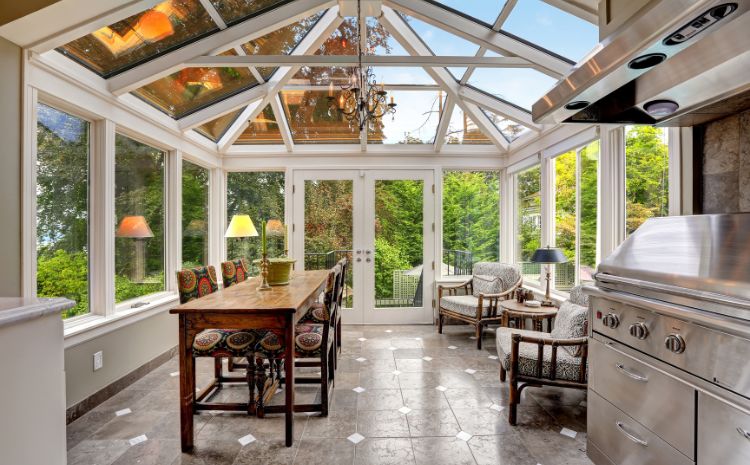
Back in July, we published a post with a deliberately contrarian premise: the best time to start a sunroom is midsummer — precisely because the best time to own one is fall. The families who took that math to heart in July signed contracts in high summer, and their projects are finishing right about now.
This post is for two audiences. First, the July starters and anyone whose sunroom is completing this month: here's what fall delivery looks like, and how to get the most out of the room's best season — which is starting outside your new windows right now. Second, everyone reading this in October with sunroom envy: here's the honest version of your calendar — what a fall start actually delivers, why the winter build is a better play than most people think, and the one mistake to avoid.
Why Fall Completion Was Always the Point
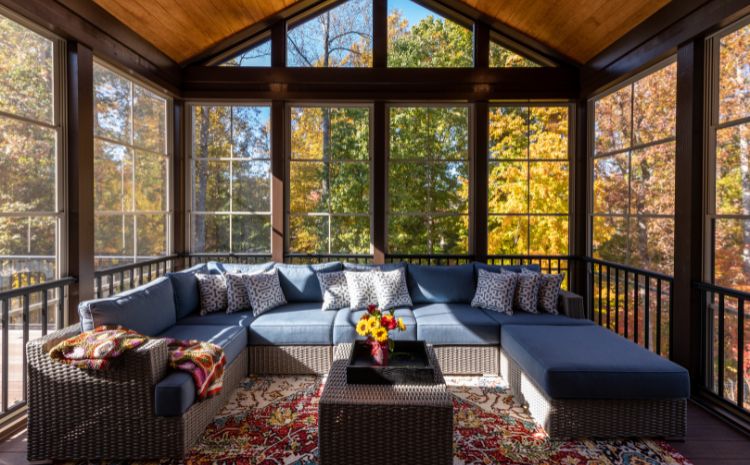
A quick reprise of the July argument, because it's now visible out the window: a sunroom is a fall-and-shoulder-season machine. Summer, the yard itself is the room. Deep winter, even a four-season room is mostly a bright view. But October and November — 50-65°F days, low sun, peak color, mosquitoes gone — this is what the glass box was built for. The families taking delivery this month get the room's absolute best weeks first: morning coffee in a 58°F sunrise without a jacket, the World Series with the windows cracked, Thanksgiving morning in the brightest room of the house while the kitchen runs hot.
The same logic runs through this whole season of posts — the deck deadline, the fire pit timing, the basement-before-the-holidays math. Projects have optimal completion seasons, and working backward from them is the entire trick. The sunroom's completion season is now.
Taking Delivery in Fall: The Shakedown Checklist
For those finishing this month, the honest owner's guide to a sunroom's first fall and winter — the shakedown season, when the room proves itself:
Run the heat before you need it. Whatever your four-season room's heating solution — extended HVAC, mini-split, or baseboard — run it on the first cool week, not the first cold one. Mini-splits (the most common solution in our builds) should heat the room comfortably alone into the 20s°F; verify it now while any adjustment is a comfortable service call instead of a January one.
Watch the glass on the first cold mornings. Light condensation at glass edges on the first sharp cold snap can be normal humidity equilibrium in a new room; persistent fogging, moisture between panes, or water at frame joints is a warranty conversation — flag it early and photographed. Modern Low-E double-pane units in a properly built room should give you clear glass and warm surfaces all winter.
Feel the floor. Sunroom floors over crawlspace or slab-edge construction are where cold announces itself first. If we built it, the insulation detail is in the floor system already — but a rug and honest feedback in the first winter helps calibrate anything. This is what workmanship warranties are for; use the first season deliberately.
Learn your sun angles. Fall's low sun is glorious and occasionally blinding — this is the season you'll learn where you actually want the shades you deferred, which is exactly the right order (buy shades for the sun you have, not the sun you guessed).
And genuinely: move in. The most common sunroom "problem" we see at one-year visits is underfurnished rooms still waiting for their furniture plan. The room works when it has the comfortable chair, the throw, the side table, the reading lamp on day one of its best season. That's this week.
Starting Now: The Honest October Calendar
For the second audience — standing in October wanting what the July people have — the real math, updated for the season:
A four-season room contracted in October runs the same phases as always: design and engineering (3-5 weeks), permits (3-6 weeks — sunrooms are structural additions and get real review), then construction (6-10 weeks). The sequencing works in fall's favor more than most assume: the weather-critical work is the first third — footings and foundation want to beat hard freeze (the same concrete clock as the deck post, typically closing late November), and the shell (framing, roof, glass) closes fast behind it. Once the room is dried in, everything remaining is interior work that laughs at January.
Which yields the honest October-start outcome: footings poured in November, shell enclosed by the holidays, interior finish through midwinter, delivery in late winter — a completed sunroom in February or March, ready well ahead of spring's first warm week. Not this fall's foliage — that ship sailed in July, and anyone promising otherwise in October is selling — but comfortably ahead of the room's other great season, spring.
The one mistake to avoid: stalling until January and landing in the spring permit-and-construction rush (the same crowd dynamics as the kitchen booking post), which converts your sunroom into a summer delivery — the room's weakest opening season, after paying the same price. October-to-December contracts thread the needle: beat the freeze on footings, build through the quiet season, deliver before spring.
And the three-season alternative deserves its honest mention from the July post: without the insulation, HVAC, and deeper foundation requirements of four-season construction, three-season rooms ($35,000-$70,000 versus $70,000-$150,000+ four-season) run shorter timelines and lighter permits — an October contract can genuinely deliver a three-season room by the holidays in many municipalities. You'll close it in January; you'll live in it by March. For fall-and-spring-focused households, it remains the value play.
The Sunroom in Winter: What Owners Actually Report
Since the first-winter question dominates every sunroom consultation, the honest field report from our four-season room owners:
The room becomes winter's favorite spot more often than summer's. This surprises people. The physics: low winter sun pours deep into a glass room all day (passive solar gain is real — sunny 30°F days often need little supplemental heat until evening), the view of snow from a 70°F armchair is the entire postcard, and in a season when the rest of life contracts indoors, the brightest room in the house carries disproportionate weight. Seasonal mood research consistently points at winter light exposure; sunroom owners live the applied version.
The honest limits: extended gray cold snaps make the room heater-dependent like any room (that's what the mini-split is for), and three-season rooms genuinely close for deep winter — that's the product working as designed, not failing.
The Christmas-morning report — the tree in the sunroom, visible from the yard and street, snow possible through three glass walls — comes back to us unprompted, every January, from somebody.
Frequently Asked Questions
Our sunroom finishes in three weeks. Anything we should push the contractor on before final payment?
The delivery walkthrough should include: heat/cool verified at the thermostat extremes, every window and door operated and locked, glass inspected in raking light (seal defects show now or in the first cold), exterior flashing and tie-in reviewed (where addition meets house is the detail that matters for the next thirty years — same tie-in emphasis as the addition post), and warranty documents in hand — manufacturer glass/frame warranties registered, workmanship terms in writing. A contractor proud of the tie-in work will happily show it to you.
Can footings really be poured in November?
Most Novembers here, yes — the same cold-weather concrete honesty as the deck post: fine until sustained freeze, manageable with cold-weather practices for a while after, and weather-dependent enough by December that good contractors schedule buffer rather than bravado. This is exactly why October signing matters for the winter-build path: it puts the concrete on the right side of the line.
Is building through winter lower quality than a summer build?
For sunrooms, genuinely no — and arguably better: the exterior-critical phase is engineered to land before deep cold, interior work is season-proof, and you're getting winter-season crew focus (the same quiet-season quality dynamic as the kitchen post's design-season argument). The room is also weather-tested from day one — its first February is happening while the workmanship warranty is freshest.
Do we heat a four-season room off our home HVAC or separately?
Mini-split heat pumps win most of our builds: independent zoning (heat the room when you're in it), no ductwork extension load calculation on the existing furnace, and excellent efficiency at St. Louis winter temperatures with modern cold-climate units. Extending home HVAC works when the system has capacity and the run is short — it's a load-calc decision made in design, not a preference.
We really just want it for next fall. When's the true deadline to relive this post's first half?
The July logic, permanently: contract by midsummer (June-July), deliver by October. Between now and then, every earlier start simply adds buffer — and the winter design season (November-February) gets you the best version of the design conversation, per everything this month's posts have argued. Start the design this winter, build in the spring or summer window, and next year you're the first audience of this post instead of the second.
The Best Room in the House, In Its Best Season
If your sunroom is finishing now — congratulations; the room's proof season starts this week, and the checklist above is your shakedown guide. If you're starting the conversation now — the winter-build path is real, honest, and delivers ahead of spring.
Covenant Contracting designs and builds sunrooms and additions across the St. Louis metro — Fenton, Wildwood, Ballwin, Chesterfield, St. Peters, Grover, Valley Park, and surrounding areas. Free consultations, honest calendars in both directions.
Request Your Free Sunroom Consultation →
Or call (314) 282-1991.