How Much Value Does a Finished Basement Add to Your Home?
"Will finishing the basement add value?" is really three different questions wearing one coat: What will an appraiser credit? What will a buyer pay? And what is it worth to your family for the years you live above it? The three answers are different numbers — and most of the frustration homeowners feel about basement value comes from expecting one answer to do all three jobs.
Here's each answer honestly, St. Louis edition, and the finishing decisions that move all three in your favor.
Answer One: The Appraiser (The Strictest Number)
Appraisers credit finished basement space — but not at main-floor rates. Below-grade finished area is typically valued at a meaningful discount to above-grade square footage (often somewhere near half, varying by market and comps), and it's listed separately on the appraisal, not blended into your home's square footage. A 1,000 sq ft finished basement does not turn a 2,000 sq ft house into a 3,000 sq ft house in the appraisal's eyes.
What moves the appraised credit up: quality consistent with upstairs (a basement finished to match the main floor appraises better than a bargain finish), a bathroom (the single biggest line-item adder, per our basement bathroom breakdown), a legal bedroom — which requires a conforming egress window, the egress requirements being non-negotiable for the "bedroom" label to count — and dry, permitted, documented work. Unpermitted finishes can be excluded from value entirely, which is the most expensive way to save a permit fee.
Answer Two: The Buyer (The Real Number)
Buyers are more generous than appraisers, because buyers don't price square footage — they price lives. A finished basement answers questions every St. Louis buyer with kids, hobbies, or in-laws is silently asking: where do the teenagers go, where does game day happen, where does the treadmill live, where do guests stay.
The resale math we stand behind is the same one from our full cost breakdown: finished basements typically recover 60-75% of the project cost at resale. Spend $60,000; expect roughly $36,000-$45,000 back in price. That's a real partial return — and it comes with a second, underrated resale effect: finished basements sell houses faster. In a two-house tie, the finished basement wins the offer even when it doesn't win a full price premium.
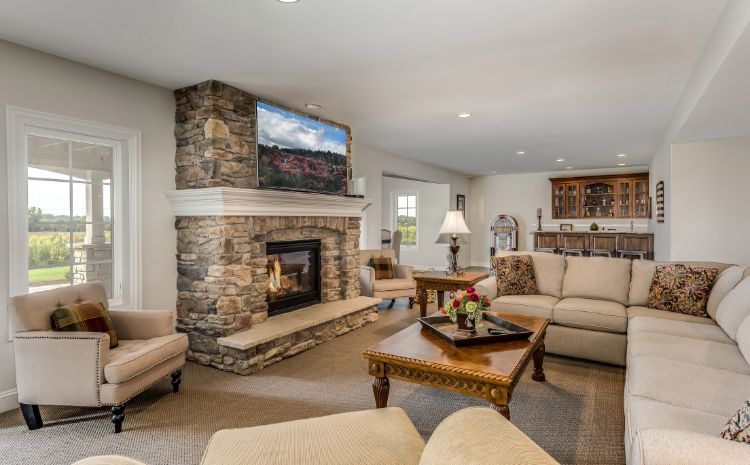
What buyers punish: dropped ceilings that graze tall heads, chopped-up rooms, obvious moisture history, and finishes that scream "flip." What they reward: open family space, real ceiling height treatment, a bathroom, daylight from proper window wells, and the sense that the basement is simply more house rather than a separate, lesser house.
Answer Three: Your Family (The Number That Usually Decides)
Here's the honest math nobody's spreadsheet includes: at $60-$110 per square foot, a basement finish is the cheapest livable square footage you will ever add to your home — a fraction of the $300-$450 per square foot that new addition space costs. If your family needs another 800 usable square feet, the basement delivers it for a third of the money, no foundation, no roof, no lost yard.
So the family math runs: value to us per year × years we'll use it + 60-75% back at sale. For a family five years from a teenager, that math almost always says yes — which is why "is it worth it" is usually answered by the calendar on your kids, not the calendar on the market.
The Decisions That Protect Value
Moisture first, always. Nothing erases basement value like water. The full sequence from our moisture post applies — how basements behave below grade is physics, not luck, and finishing over an unaddressed moisture history converts a $2,000 fix into a $20,000 tear-out.
Permit everything. Permitted work appraises, survives inspection, and transfers cleanly at sale.
Buy the bathroom. It's the highest value-per-dollar add-on in the basement universe.
Spend on light. Recessed lighting on dimmers, bigger egress wells, glass in doors — the difference between "basement" and "downstairs" is mostly lumens.
Match upstairs quality. Same trim, comparable flooring tier, real doors. Consistency is what lets buyers mentally merge the basement into the house.
Frequently Asked Questions
Does a finished basement add value to a home?
Yes — three ways: appraisers credit it (at below-grade rates, less than main-floor space), buyers typically return 60-75% of project cost at resale and buy faster, and your family gets living space at $60-$110/sq ft instead of addition pricing at $300-$450/sq ft. The full picture is worth more than any one number.
Does a finished basement count in square footage?
Not in the main above-grade figure — it's listed separately as finished below-grade area on appraisals and most listings. It still adds value; it just adds it in its own line.
Is finishing a basement worth it before selling?
Within a year of selling: usually no — you'll recover 60-75%, not 100%+, and you'll endure the project for someone else's benefit. Two or more years out: often yes, because you collect the living value and the resale bump. The exception is a nearly-finished basement needing modest completion — finishing that before listing frequently pays.
What adds the most value in a basement finish?
In order: a bathroom, a conforming bedroom (egress window required), quality consistent with the main floor, and visible dryness — sump, dehumidification, and clean permits documented for the buyer's inspector.
Run Your Numbers
Bring us your basement's square footage and what your family actually needs from it — we'll give you the real cost, the honest value math on all three answers, and the moisture-first sequence that protects every dollar of it.
Covenant Contracting designs and finishes basements across the St. Louis metro — Fenton, Wildwood, Ballwin, Chesterfield, St. Peters, Grover, Valley Park, and surrounding areas.
Request Your Free Basement Consultation →
Or call (314) 282-1991.